Sun
Long Open Seams
- You See
- A probe slides under the seam edge in several places.
- What It Means
- Heat cycling loosens seams over long runs. Each gap is cleaned and welded or taped.

West Chandler commercial roof repair for wide tilt-up warehouse roofs: every field seam probed, cracked blisters cut out, and the few scuppers that drain the roof kept clear.
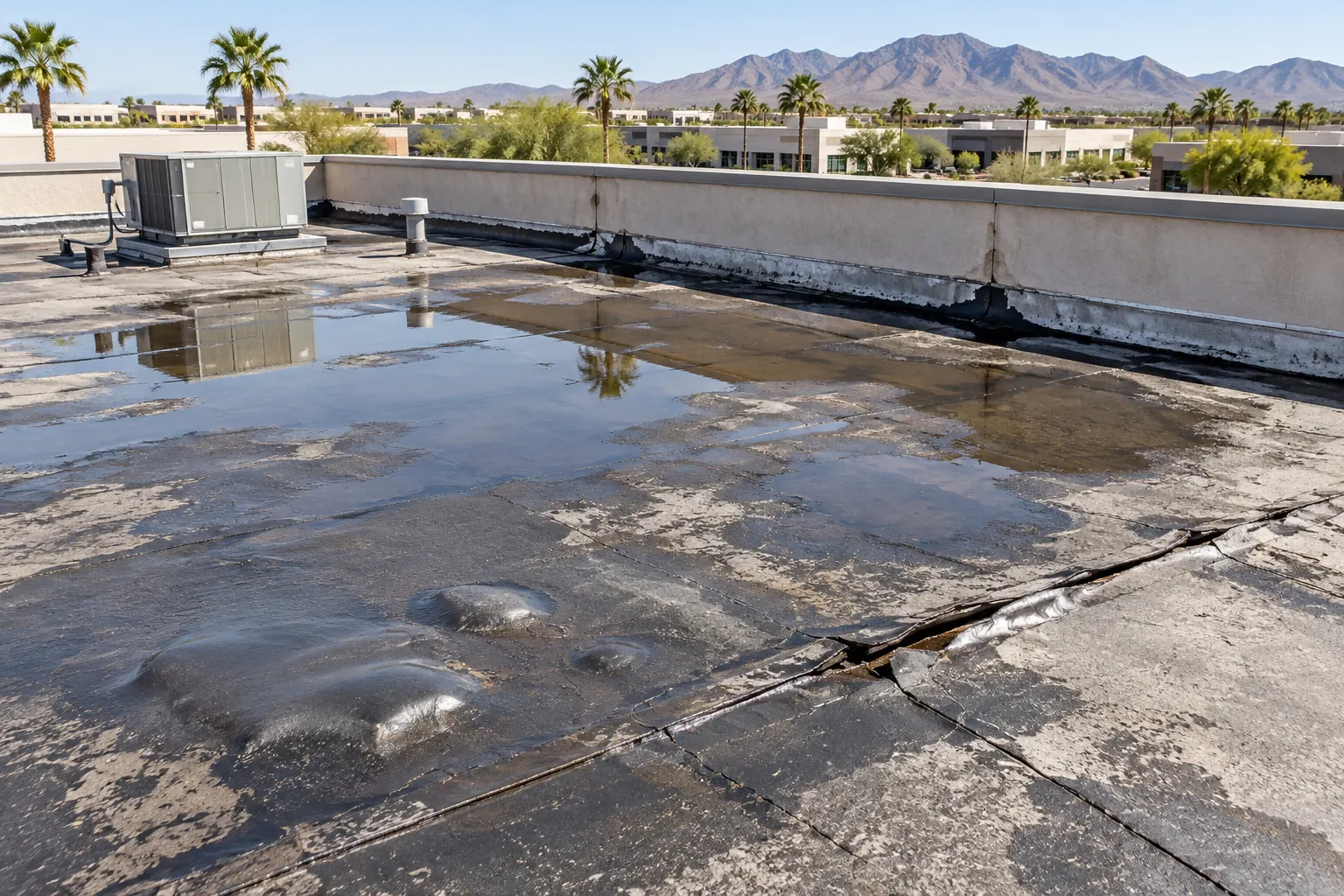
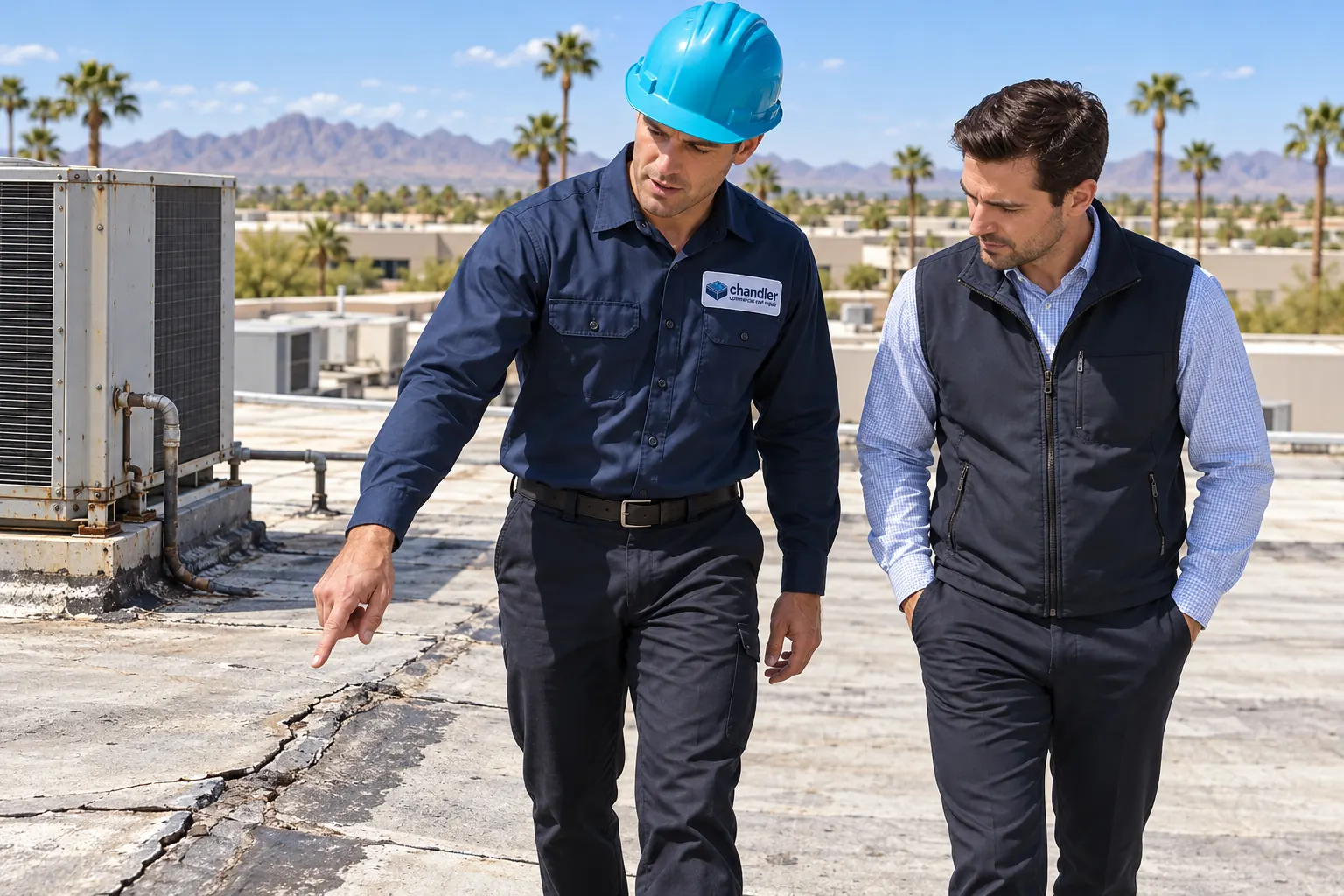
West Chandler tilt-up warehouses and flex buildings have wide roofs that drain to a handful of scuppers. Years of heat cycling stretch every field seam, and on a roof that size, long runs of seam can open up before anyone notices a leak below.
The repair is methodical: probe every seam, mark the gaps, cut out cracked blisters, and keep each scupper clear so water leaves the roof. Matching material matters on aged single-ply.
Big roofs spread the wear across long seams and a few drainage points.
On a wide roof, catching seams early keeps the repair to patches.
Small openings along long seams soak the insulation under them.
Welding or taping each gap while the board is dry keeps the job to seam work.
A cracked blister in a low spot fills with water every storm.
Cutting it out and patching closes it before the insulation gets wet.
One clogged outlet floods a wide section of roof.
Cleared scuppers and resealed scupper boxes move water off quickly.
Without a map, the same seams get probed from scratch each time.
A roof plan with every repaired gap makes the next check faster.
Wide warehouse roofs mostly need these two services.
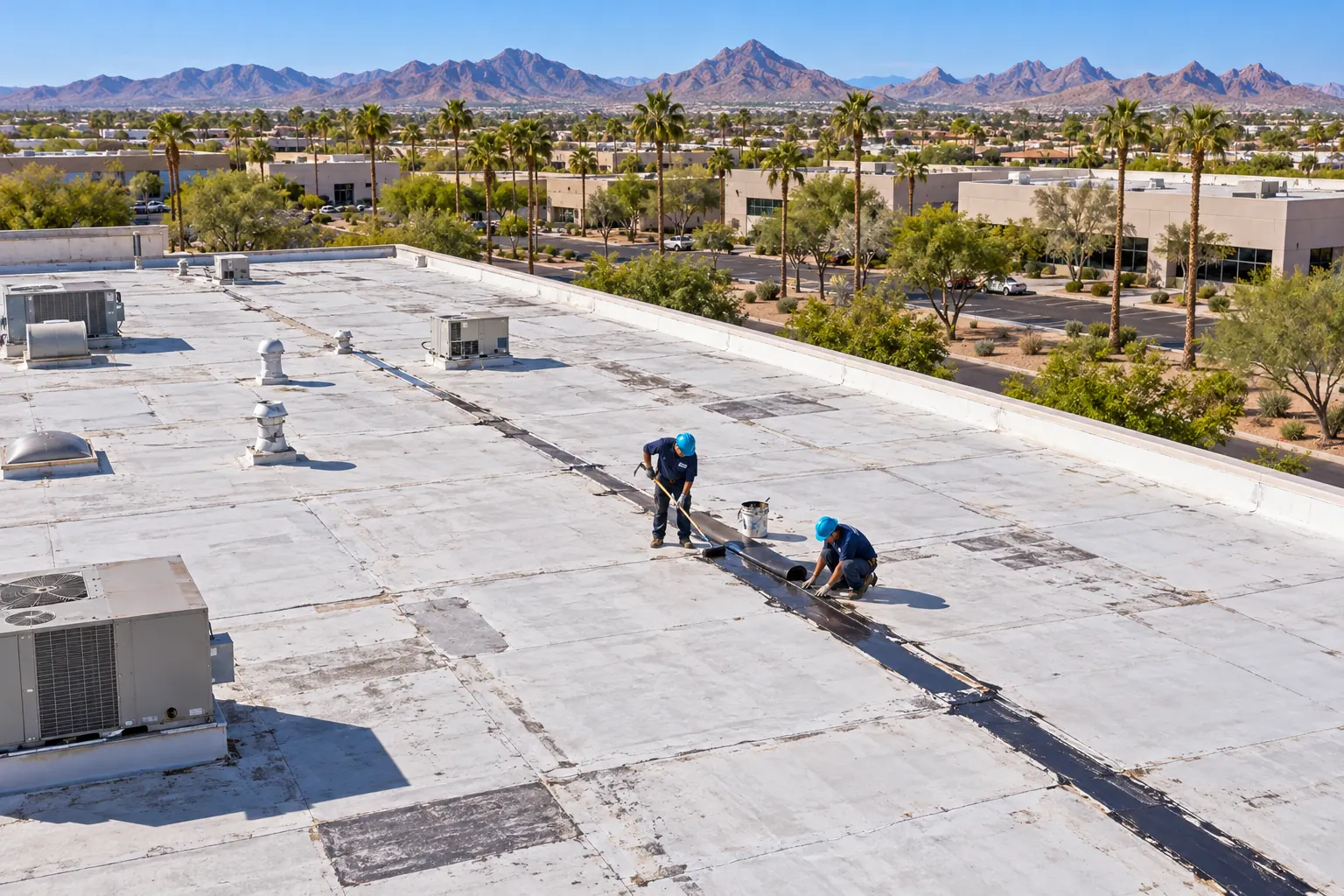
Seam probing, welded or taped repairs, blister cut-outs, and scupper work on single-ply roofs.
Flat Roof Repair details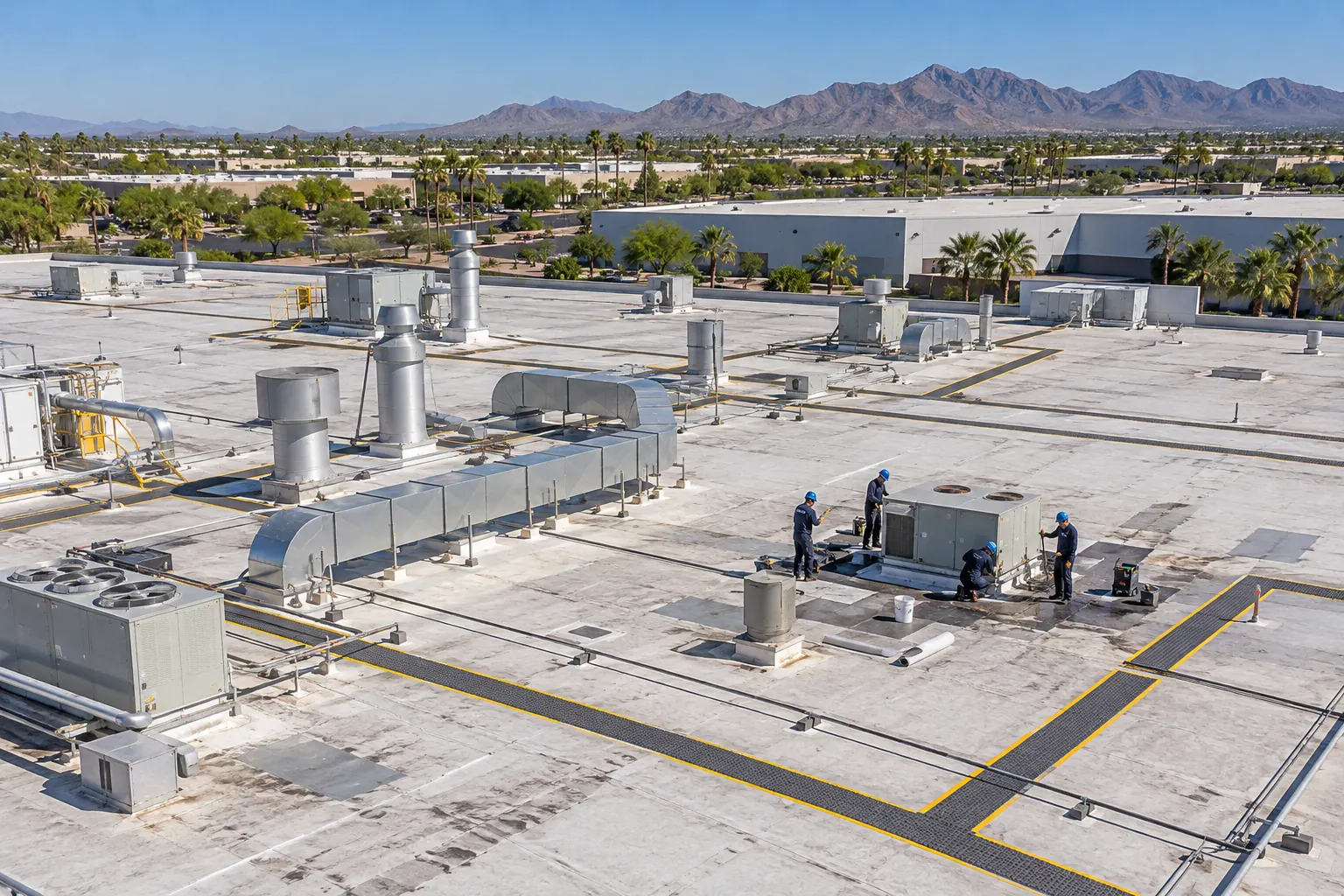
Repairs scheduled around distribution and light manufacturing work, zone by zone.
Industrial Roof Repair detailsCall and tell us which wall the water collects against. A blocked outlet on a wide roof is the first thing to clear.
Five steps for large single-ply roofs.
We probe every field seam end to end, check each scupper and drain, and mark gaps, blisters, and wet insulation on a roof plan.
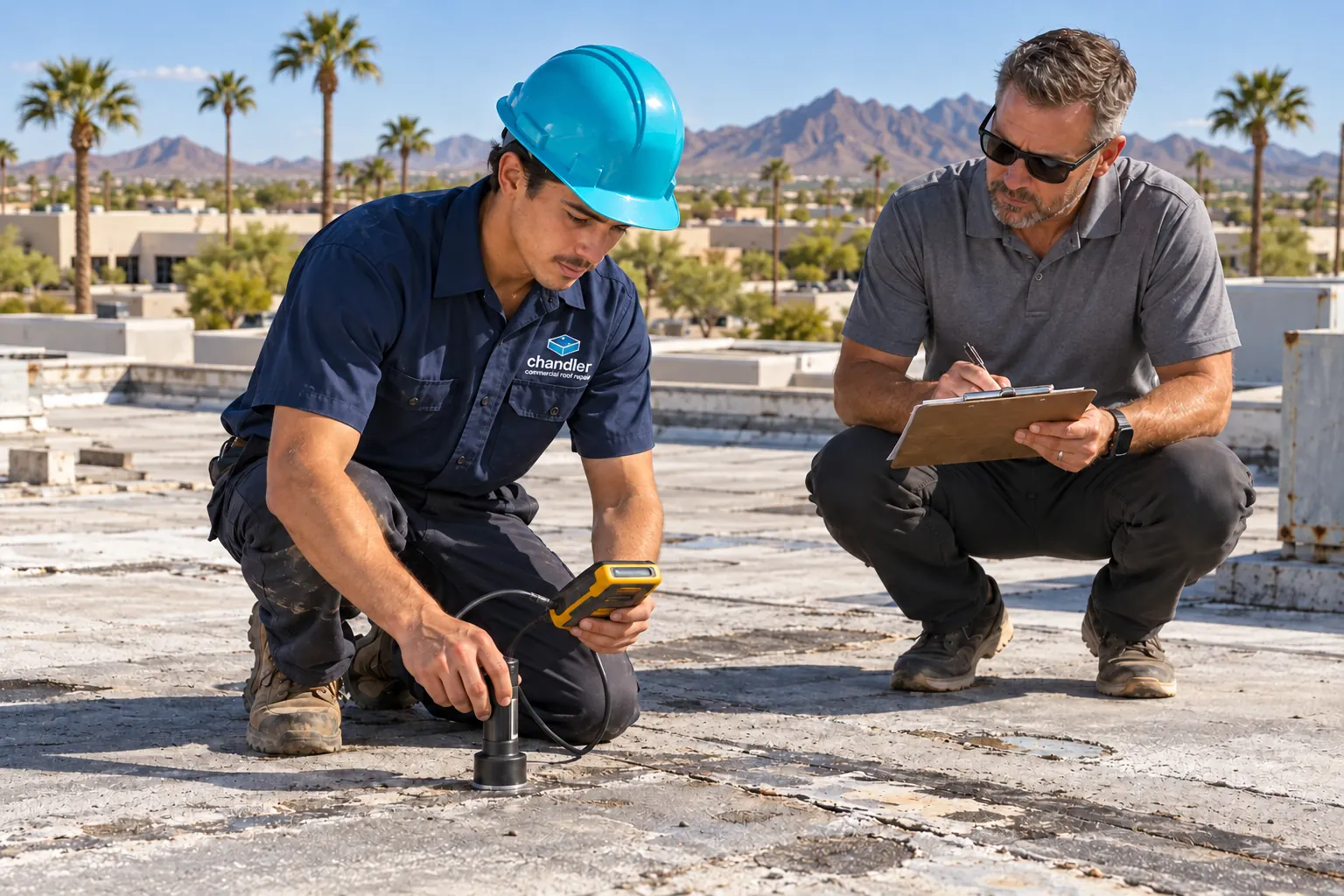
Scuppers and drains are cleared first so the roof drains while the rest of the work goes on.
Each gap is cleaned of dirt and chalky film and primed so new material bonds to aged sheet.
Gaps are welded or taped with matching material, and cracked blisters are cut out, dried, and patched.
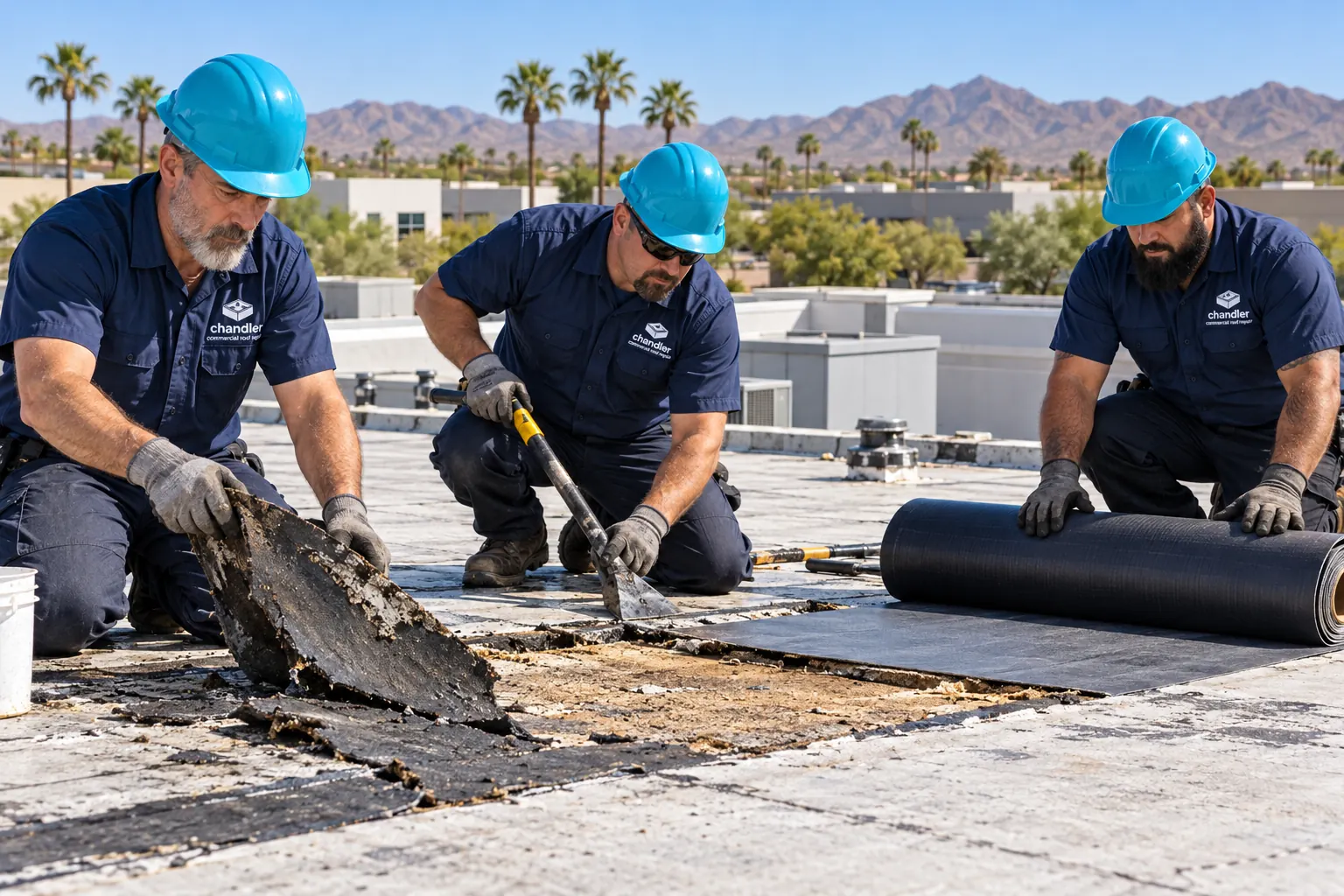
Every repaired seam is probed again, and the low spots get a water test.
Nearby areas and the repair each one sees most.
Pitch pans and pipe supports on plant roofs.
Vent boots on community buildings.
Stopgaps for storefront leaks.
Wind damage records and repairs.
Answers on seams, blisters, scuppers, and docks.
Often, yes. Water that stays more than about 48 hours after rain leaves a dirt ring and points to a sagging deck, a blocked drain, or crushed insulation.
Blisters form when trapped moisture or air expands in the heat; a small intact one can be watched, and a cracked or growing one gets cut out and patched before water reaches the insulation.
City of Chandler Building Safety, the same office that covers the rest of the city. Seam and blister repairs are less likely to need a permit than replacing a roof section, so confirm before larger work.
By probing them. A roofer runs a seam probe along every field seam, end to end, and marks each spot where it slides under the edge. On a wide warehouse roof that takes time, and it is the only reliable way to find gaps before they leak.
Wide tilt-up roofs are often sloped to drain toward a handful of scuppers through the walls. That works while every scupper is clear; one blocked outlet backs water up across a large area. Keeping them clear is cheap protection.
After cleaning and priming, usually. Aged TPO turns chalky, and a weld on dirty sheet fails early. If a test weld will not hold, the seam is covered with a strip of new membrane or that section is replaced.
Rarely. Materials go up by hoist or lift away from dock doors, and staging stays on the roof. The noisier steps, like cutting out blisters and wet board, are short and can be set around your shipping schedule.
At least twice a year, with a look after any severe wind. On wide roofs, the spring visit before monsoon season matters most, since clear scuppers and tight seams carry the roof through the storms.
Trapped moisture or air under the membrane. When the sun heats the roof, that moisture expands and pushes the sheet up into a bubble. Small ones can stay put for years; cracked ones let water straight into the insulation, so they get cut out and patched.
Request a free estimate or call about seams, blisters, or scuppers on a West Chandler roof.
Leave a name and number and we will call you about the leak or repair.
Or call now: (623) 310-0187