Monsoon Wind
Peeled Membrane At Corners
- You See
- A lifted sheet corner or a flap moving in the wind.
- What It Means
- Wind gets under a loose edge and peels it back. The sheet is re-adhered or the torn section replaced.

Queen Creek commercial roof repair after monsoon wind: damage photographed and logged for your insurer first, then peeled membrane and lifted flashing re-secured or replaced.
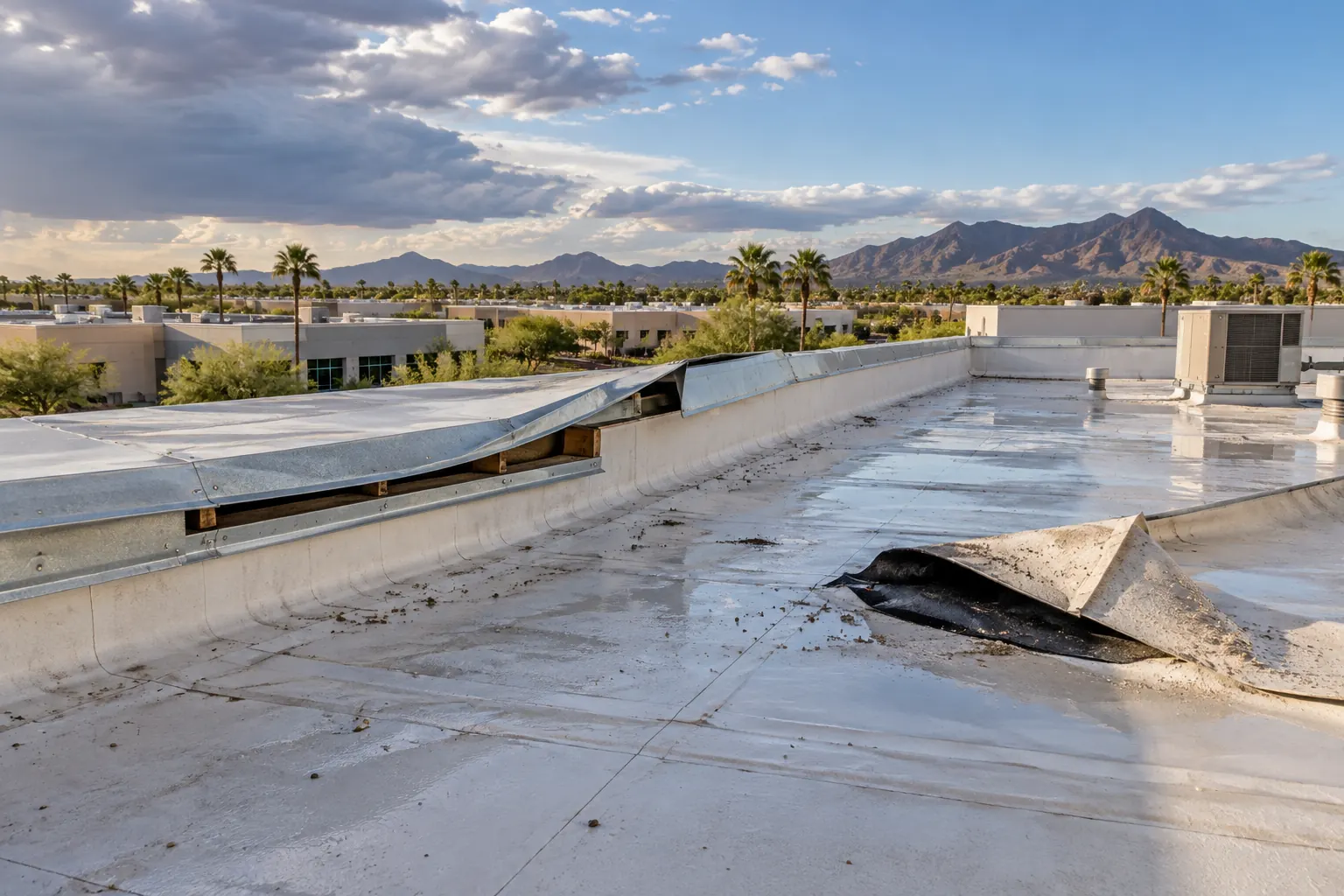

Monsoon outflow winds can top 50 mph, and Queen Creek buildings on open lots take the full gust. The usual damage is peeled membrane at corners, lifted edge metal, and flashing pulled off walls and curbs.
The Arizona Department of Insurance and Financial Institutions advises calling your insurer before repairs or cleanup. So the order here is records first, temporary repairs second, and permanent repairs once the claim and the weather allow.
Each of these starts at an edge, a seam, or a piece of metal that was already loose.
After a storm, the order of the work protects both the roof and the claim.
Roof repairs made before photos leave the adjuster nothing to see.
Dated photos and saved pieces give the insurer a clear record before work starts.
A peeled corner lets the next storm push rain under the sheet.
Weighting and taping the edge right away limits water entry until the permanent fix.
One loose section catches wind and pulls more membrane with it.
Resetting and refastening the edge stops the peel from spreading.
Larger roof replacement work can stall when permits come up late.
The Town of Queen Creek Building Safety office covers buildings on both county sides, so one call settles it.
Storm repairs fall under these two services most often.
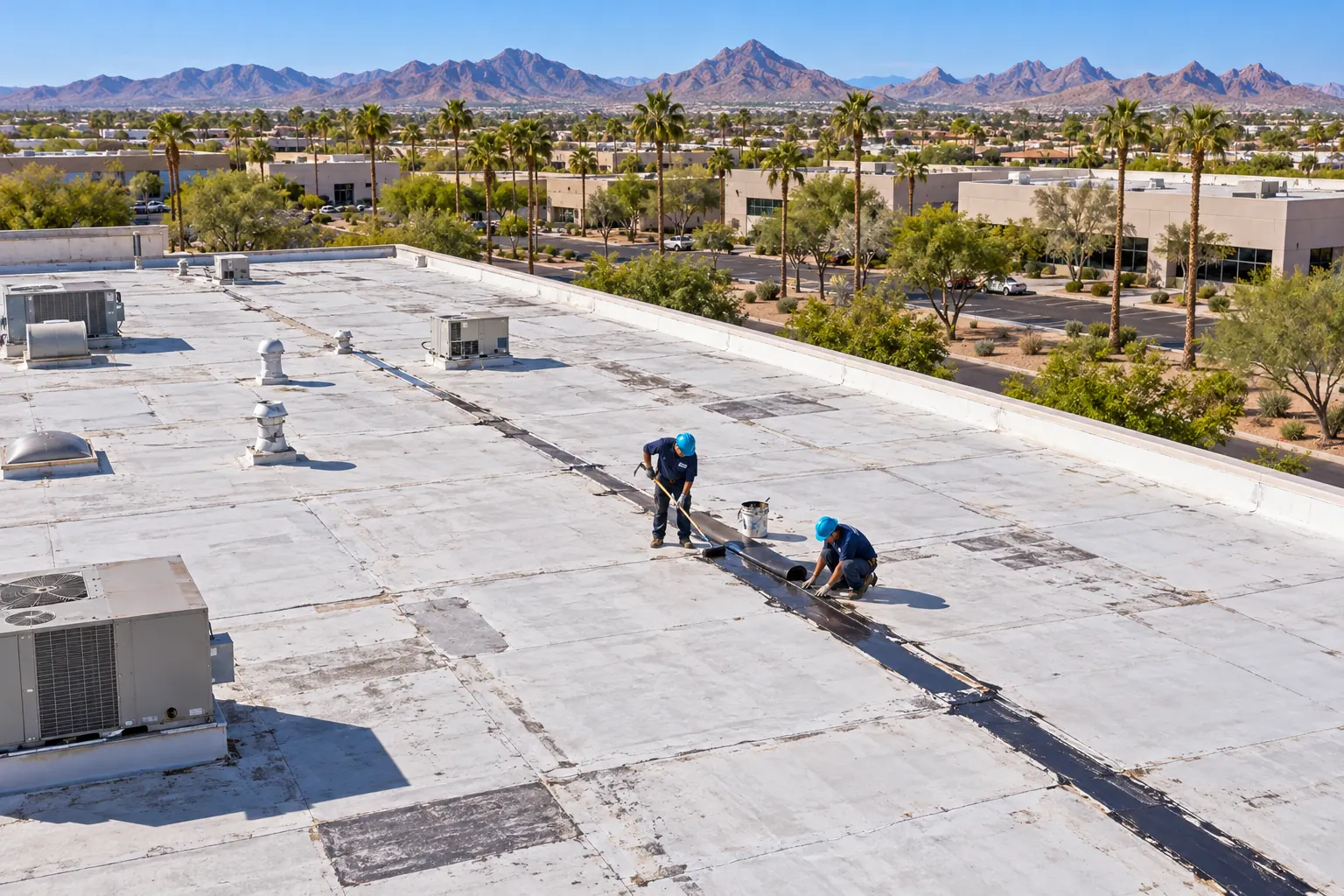
Re-adhering peeled membrane, patching torn corners, and rebuilding wall and curb flashing on low-slope roofs.
Flat Roof Repair details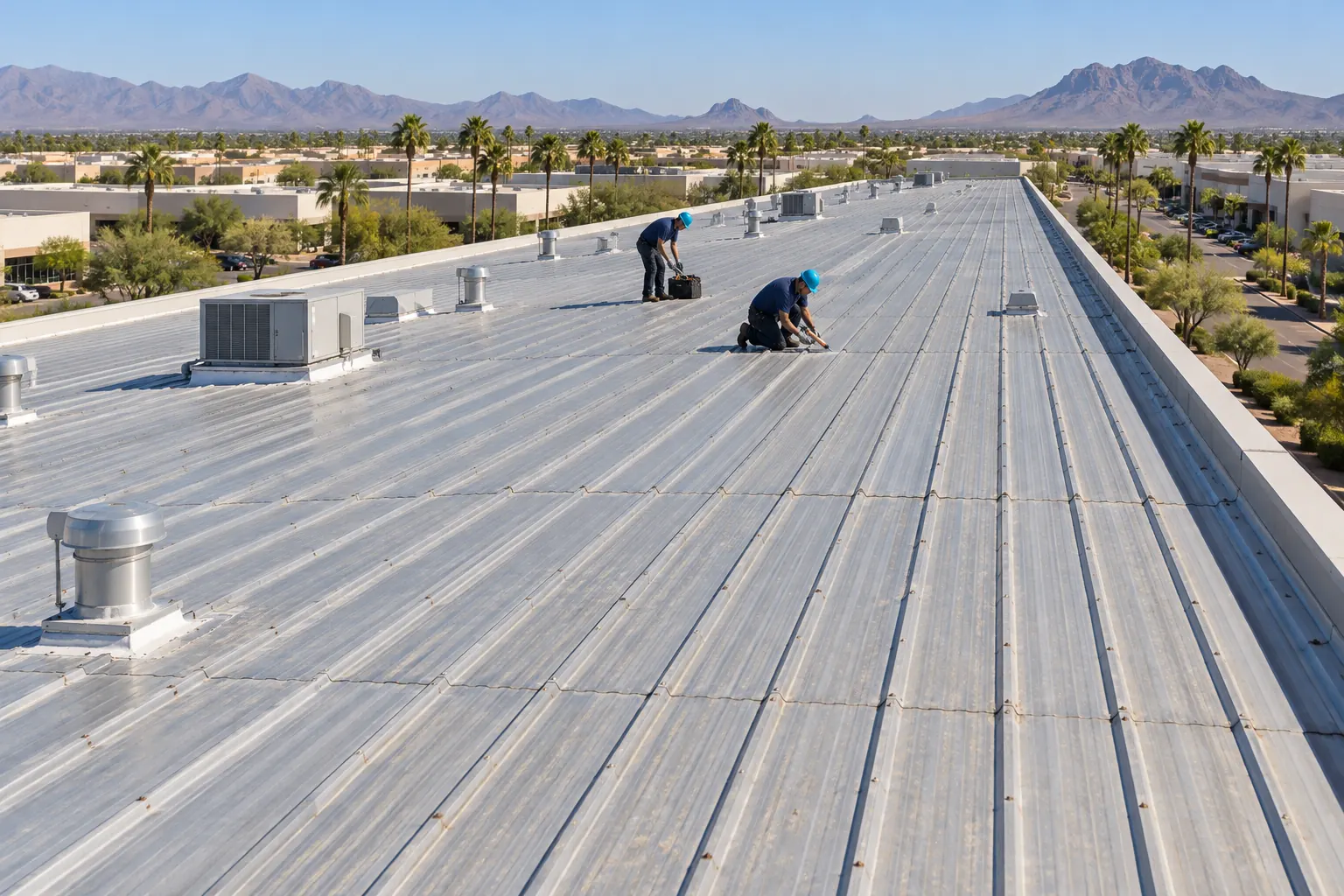
Refastening lifted panels and trim, replacing closures, and resealing laps on shop and storage buildings.
Commercial Metal Roof Repair detailsCall, then photograph the damage before anything moves. A temporary repair goes on once your insurer has been notified.
Four steps in the order your claim needs.
We walk the roof and photograph every damaged edge, seam, panel, and flashing, with dates, and set aside any torn pieces for the adjuster.

Peeled edges are weighted and taped, drains cleared, and openings covered so the next storm adds no new damage.
Damaged roof areas are measured and listed with photos so you and the adjuster see the same findings.
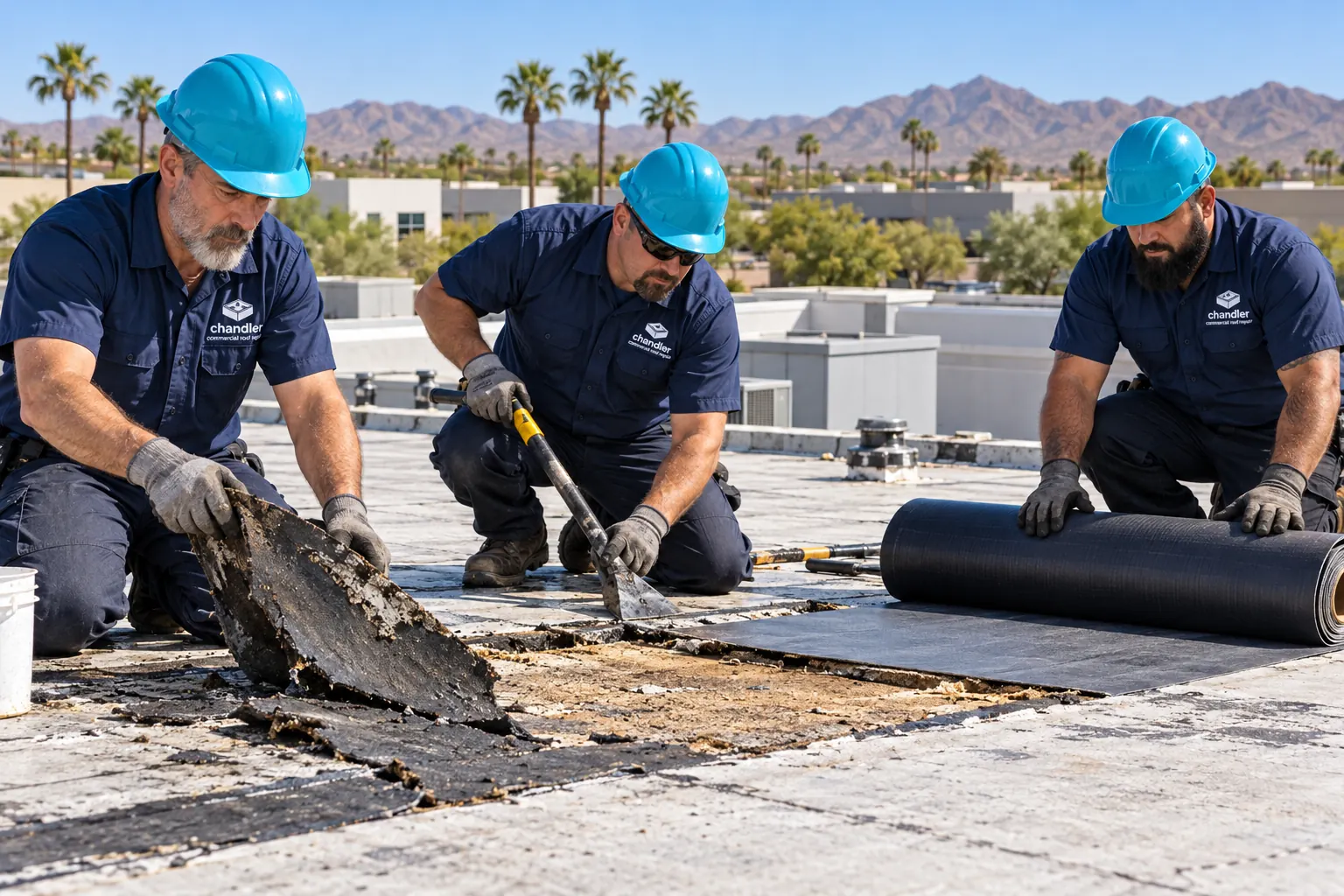
Torn membrane is cut out and patched, edge metal reset and refastened, and wall and curb flashing rebuilt, then water-tested.
Nearby areas and the repair each one sees most.
Curb flashing repaired with units in place.
Stopgaps for occupied storefronts and offices.
Vent boots on clubhouse roofs.
Warehouse seams and blisters probed and patched.
Answers on wind damage, insurers, and permits.
Start with safety and records. The Arizona Department of Insurance and Financial Institutions advises calling your insurer before repairs or cleanup. Photograph lifted flashing, torn membrane, displaced panels, and ceiling stains with dates, keep damaged pieces for the adjuster, limit early work to temporary repairs that stop water, and save every invoice tied to the emergency work.
The Town of Queen Creek Building Safety office. Queen Creek has buildings on both the Maricopa County and Pinal County sides, and the town office covers both. Larger work, like replacing a roof section, is more likely to need a permit than a patch.
Strong enough to lift loose roofing. The National Weather Service Phoenix office notes that monsoon outflow winds can exceed 50 mph during the June 15 to September 30 season. Gusts that strong find any edge or flashing that was already loose.
Yes, to stop more water from getting in. Photograph everything first, keep the damaged pieces, and limit the work to temporary repairs until your insurer has seen the damage or approved more. Save the invoice for the emergency work.
Rarely. A lifted seam or loose flashing can look fine from the parking lot and still let rain in. A roof walk after a strong storm catches damage before the next one finds it. Check the ceiling below the roof edges too.
Somewhat. Metal panels lift at the eave and ridge when fasteners are loose, and trim and closures blow off. Repairs focus on refastening panels with new screws, replacing closures, and resealing laps the wind opened.
Within days, before the next storm. Monsoon cells often come in runs, and an edge lifted by one storm peels further in the next. An early walk also gives your insurer dated photos close to the event.
Every damaged area, close up and wide: peeled membrane at corners, lifted edge metal, flashing pulled from walls and curbs, dented panels, and debris in drains. Inside, the ceiling stains and anything wet. Dated photos taken before cleanup give your insurer the clearest picture of what the storm did to the roof.
Request a free estimate or call about wind damage on a Queen Creek roof.
Leave a name and number and we will call you about the leak or repair.
Or call now: (623) 310-0187