Deck Flutes
Water Running Along The Deck
- You See
- A drip in the middle of a room with no damage above it.
- What It Means
- Water follows the deck flutes downslope and drops at the first gap, often many feet from the opening.

Commercial roof leak repair in Chandler that finds where water actually enters, then fixes that seam, flashing, or penetration and checks it after the next rain.
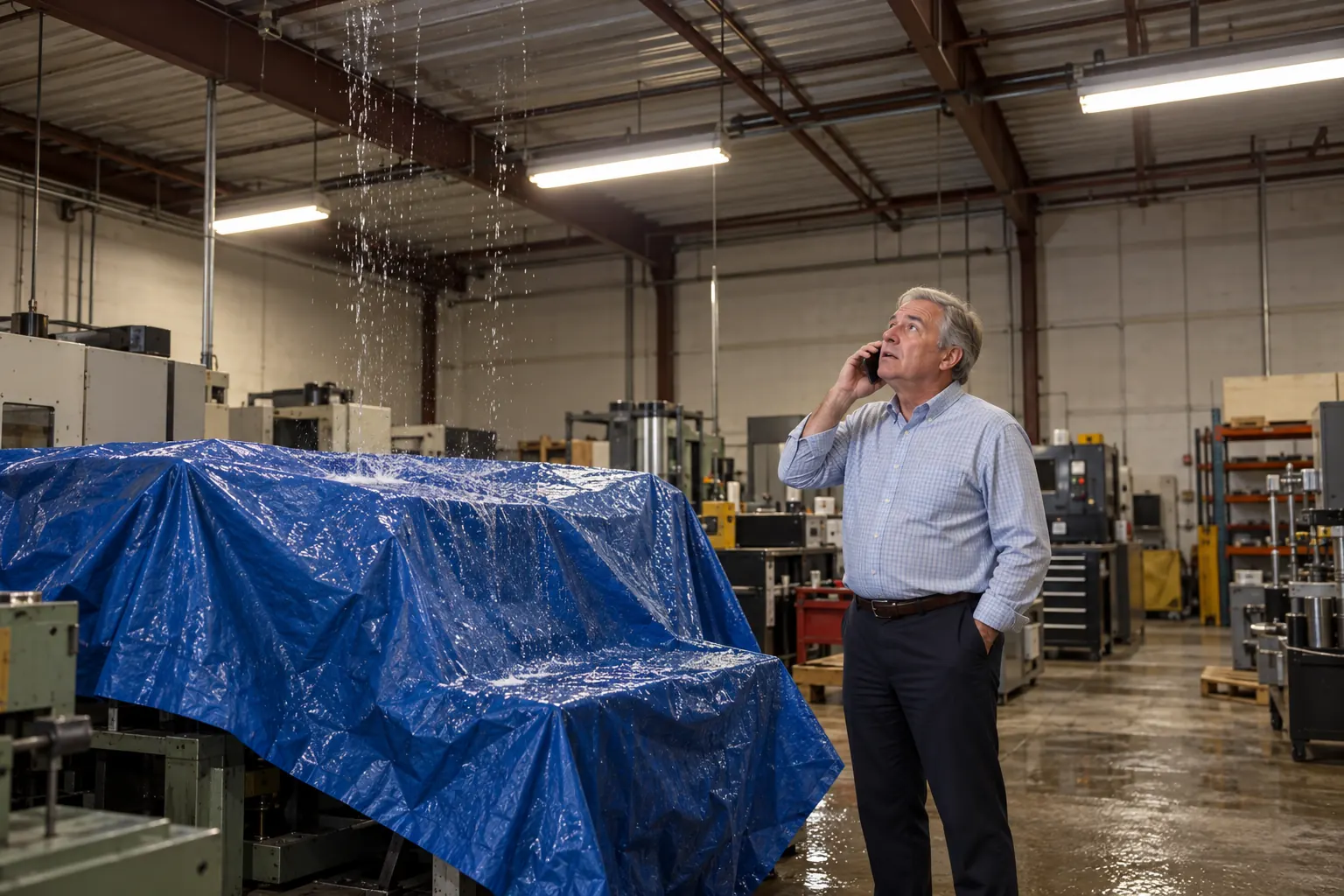
Both have a place. A stopgap protects the building today, and the permanent fix goes on once the roof is dry.
Water travels before it drips. These are the paths that hide the source.
Leak work comes in four parts, and most jobs use more than one.
| Repair | What It Fixes | When It Is Enough |
|---|---|---|
| Leak tracing | Finds the true entry point | The source is hidden or the stain sits far from any damage |
| Temporary leak control | Slows water during active rain | The roof is wet or material has to be ordered |
| Permanent detail repair | Rebuilds the seam, flashing, or penetration | Insulation under the opening is still dry |
| Wet insulation replacement | Removes soaked board and closes the roof | Core cuts find wet board around the entry point |
A leak keeps working while it waits. Fixing the entry point early protects more than the ceiling tile.
Each storm adds water to the insulation above the tile, well beyond the visible spot.
Finding and sealing the entry point stops the hidden spread above the ceiling.
Wet boards lose insulating value and hold water against the deck.
Replacing only the wet boards keeps the repair local and the deck dry.
Drips land on inventory, machinery, and finished floors.
A stopgap and tarps protect the space now, and the permanent repair ends the cleanup.
Patching where water lands inside misses the opening on the roof.
Tracing the leak to its source makes the first permanent repair the last one at that spot.
Call for a stopgap first. Move what you can, set a bin under the drip, and keep the room clear until the roof is sealed.
From the stain inside to the recheck after rain.
We start inside at the stain, note its size and location, then go up and walk the roof above it in dry weather, checking seams, curbs, penetrations, and parapet corners.
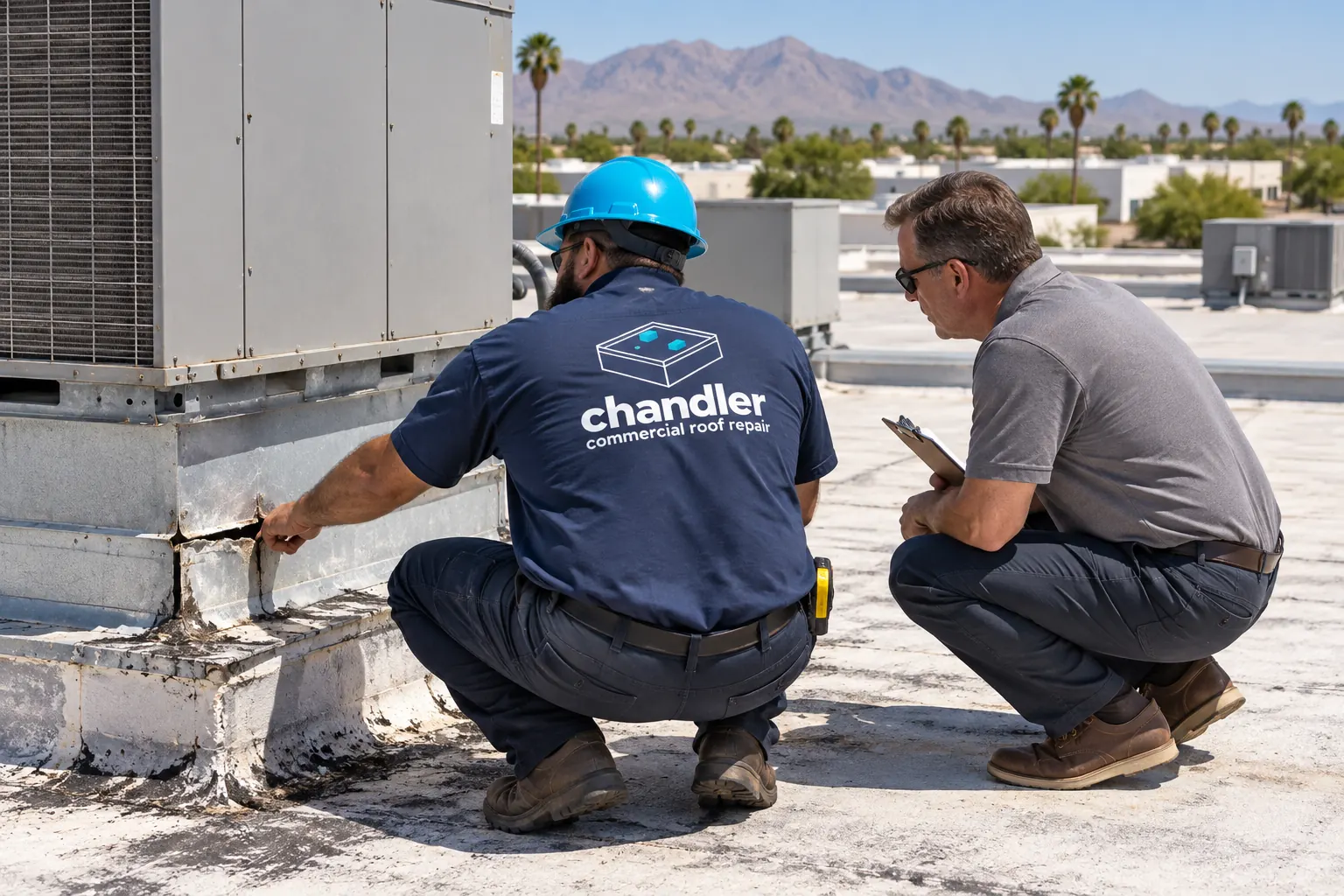
Water runs downhill along the deck, so the search moves upslope from the stain. Moisture meters and infrared scans show where wet insulation starts.
When the source still hides, a controlled water test runs over one seam or curb at a time while someone watches inside for the drip.
The failed seam, flashing, or penetration is rebuilt, and any wet insulation around it is cut out and replaced before the roof is closed.
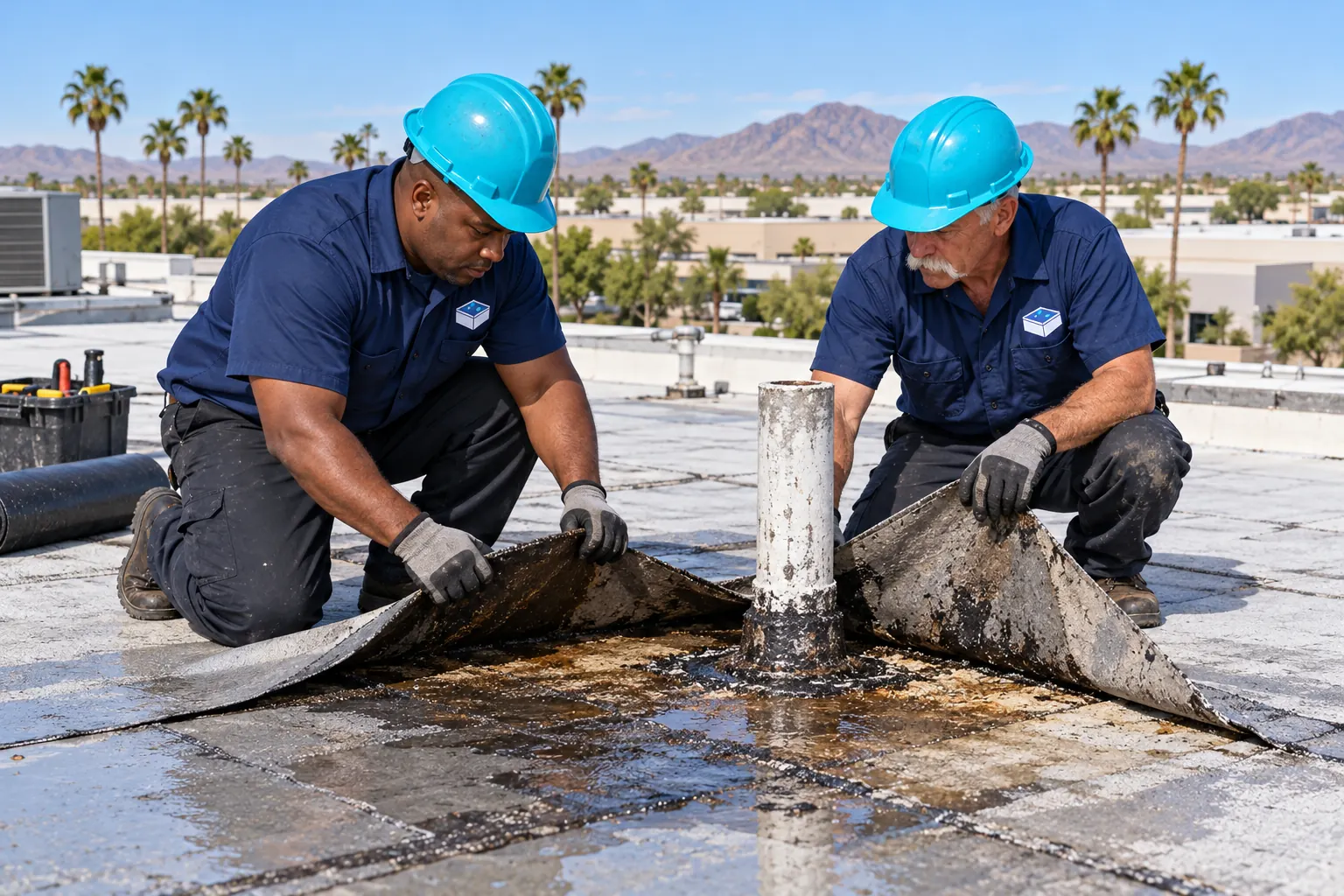
The repaired detail gets a water test right away and another look after the next storm to confirm the ceiling stays dry.
Leaks usually end in one of these two repairs.
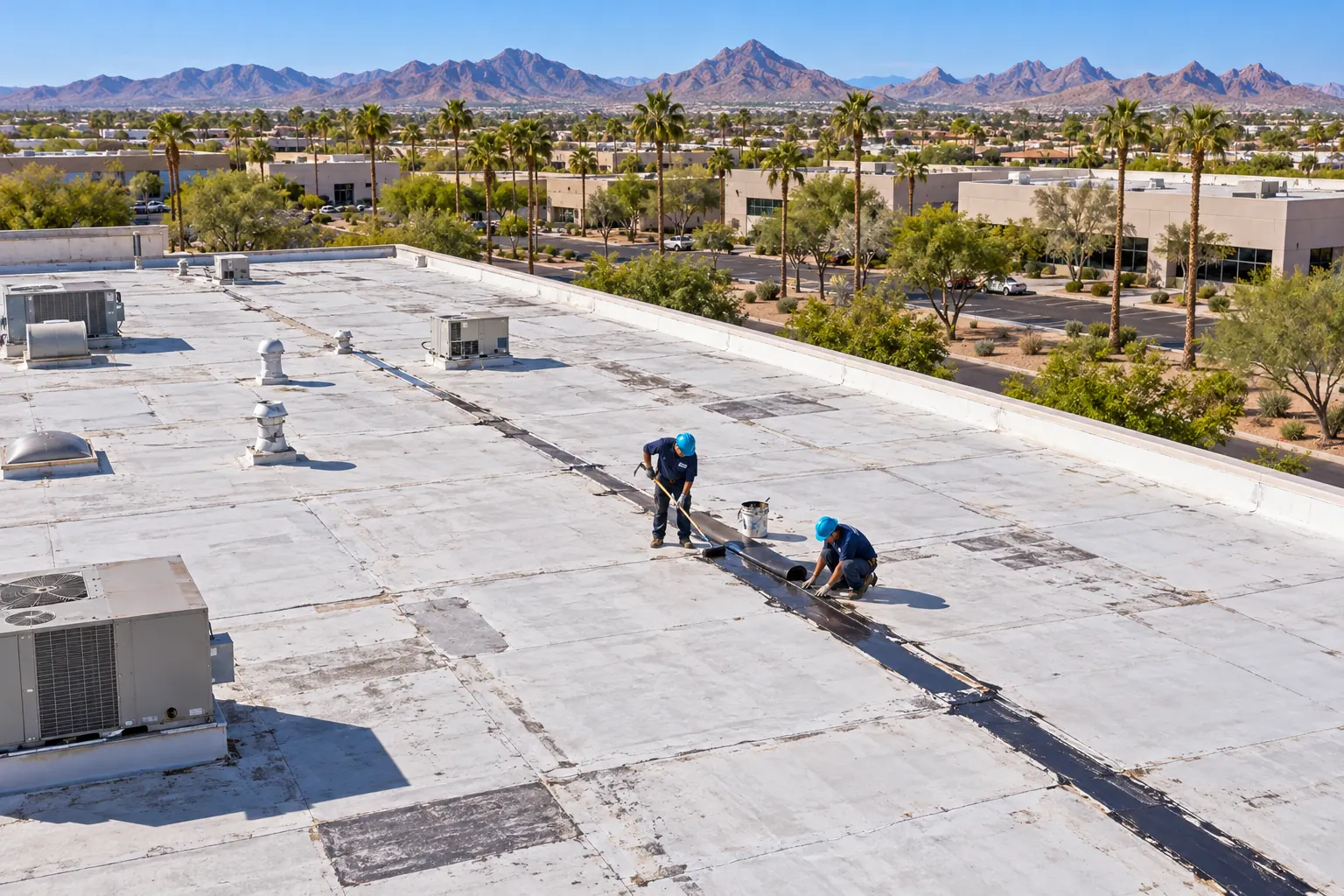
Most leaks on low-slope roofs start at a flat roof seam or transition, so the permanent repair often falls under flat roof work.
Flat Roof Repair in Chandler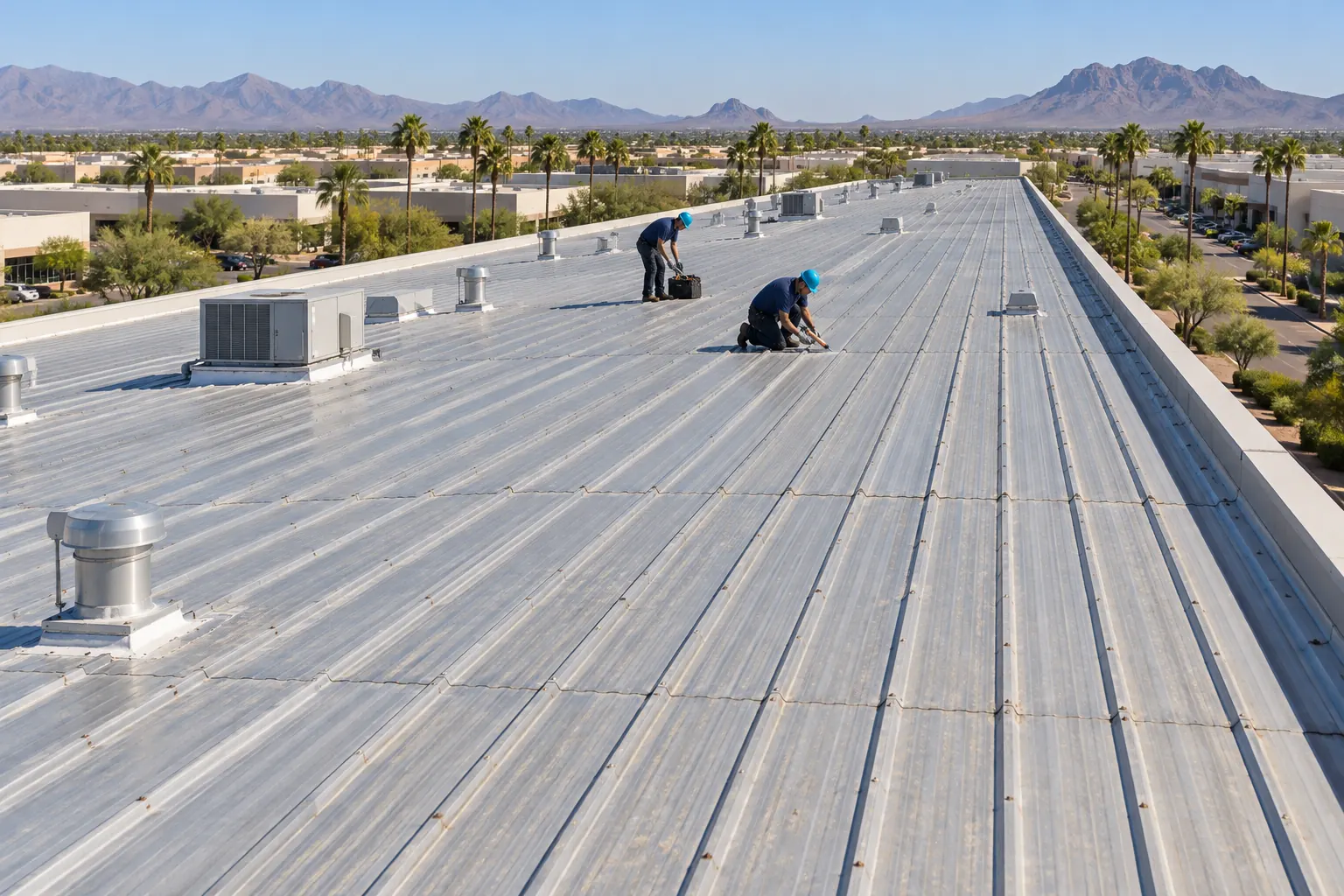
Metal buildings leak at fasteners and laps, and the water often travels along purlins before it drips.
Commercial Metal Roof Repair in ChandlerAnswers on tracing, stopgaps, and what to do inside.
Water travels before it falls. It enters at a seam or flashing, runs along the deck, the insulation boards, or a joist, and drops wherever it finds a gap, often many feet away. That is why leak repair starts with a dry-weather walk above the stain and works upslope toward curbs, penetrations, and parapet corners.
With three tools. A moisture meter finds wet insulation through the membrane, infrared scans show wet areas as temperature differences, and a controlled water test soaks one detail at a time while someone watches inside. Used together, they narrow the search to a single seam or penetration.
Call as soon as you see the drip. A stopgap can go on during or right after the storm, and the inspection is easier while the stain is fresh and the wet area still shows on the roof. Note the time the drip started; it helps match the leak to the weather.
Move inventory and equipment away from the drip, set a bin or catch basin under it, and cover anything that has to stay with plastic sheeting. Keep people clear of wet floors and sagging tiles, and photograph the ceiling and anything damaged.
Most show up then because monsoon rain is heavy and wind-driven. Winter storms find the same openings with steadier rain, and condensation under a metal roof can drip in cool weather even when the roof itself is dry.
Only for a short time. Temporary tape, flashing, or a cleared drain buys time while the roof dries and materials arrive. The permanent repair should follow soon after, because stopgaps are made to hold through a storm or two.
Request a free estimate or call about a roof leak in a Chandler building.
Leave a name and number and we will call you about the leak or repair.
Or call now: (623) 310-0187