Age
Cracked Pitch Pans
- You See
- Gaps in the fill around conduit or gas lines on the roof.
- What It Means
- Fill shrinks with heat. Pans are cleaned and refilled or replaced.

Price Corridor commercial roof repair for plant and campus roofs: pipe supports, pitch pans around conduit and gas lines, and flashing at crowded penetrations, done on the plant's schedule.
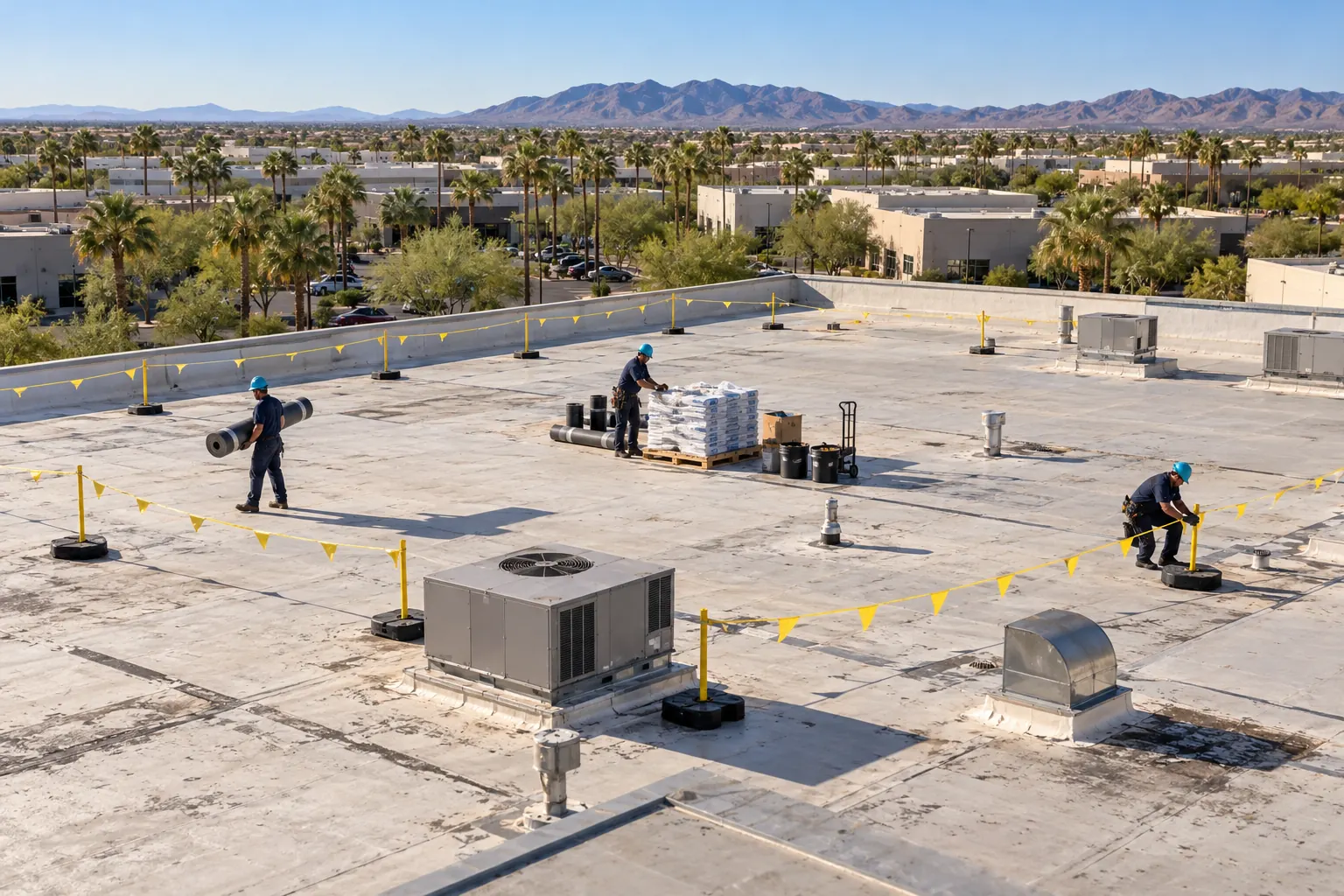
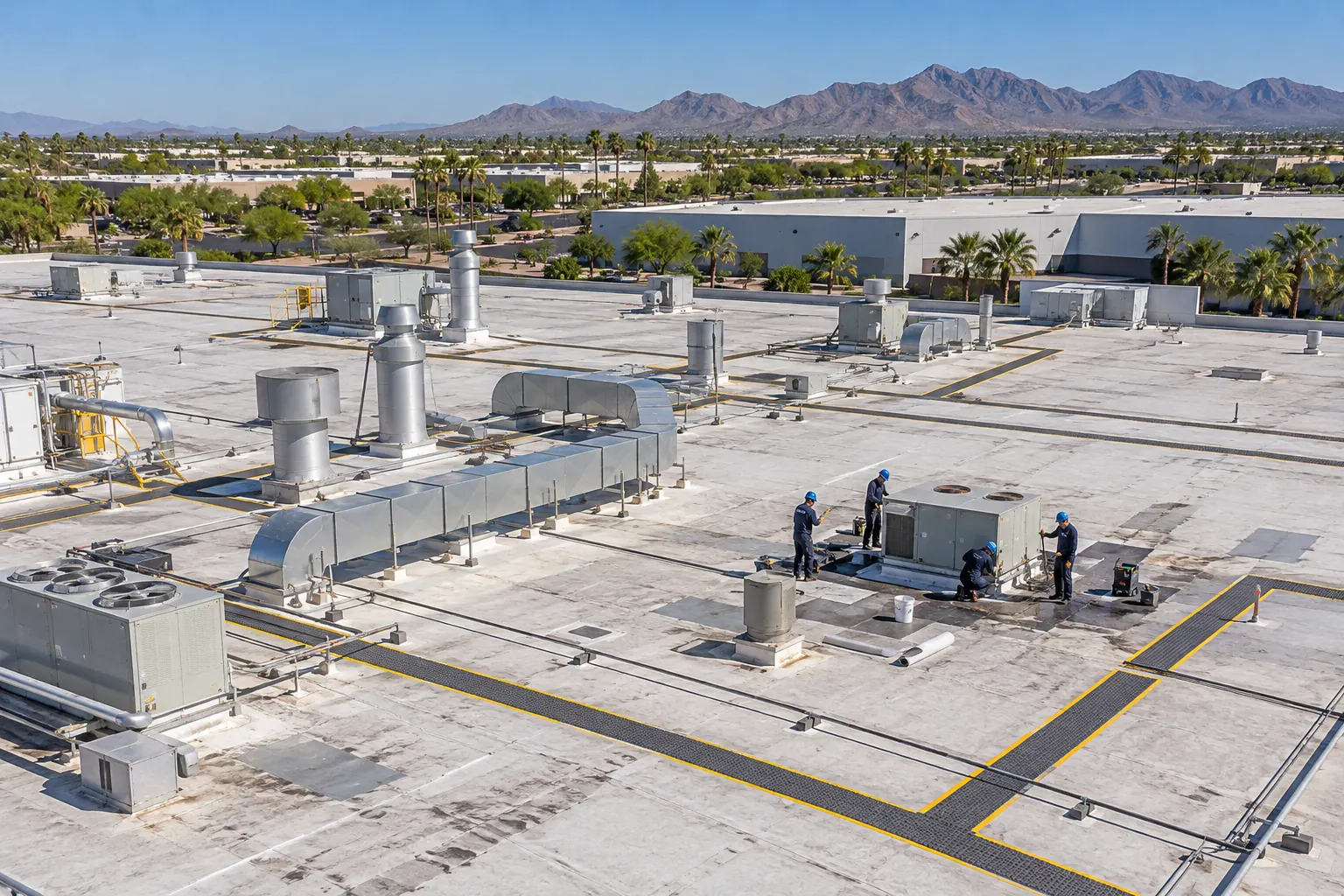
Price Corridor campuses run semiconductor, aerospace, and technology operations, and their roofs carry long runs of process piping, conduit, and gas lines on supports. Every support and every line that drops through the roof is a place where membrane can split or a pitch pan can crack.
These repairs happen under and around live lines, so the piping stays put. Supports are lifted or shimmed only with your facility team's approval, and work near exhaust fans waits until they are shut down and locked out.
Piping and conduit move with heat and vibration, and the roof under them takes the wear.
Under live lines, small repairs protect the production below.
Water follows the line into the building, near equipment.
A refilled pan seals the line while everything keeps running.
A support grinds through membrane under a heavy line.
A new pad and patch stop the wear before it opens a leak.
Moisture hides beneath piping where nobody walks.
A meter check and cut-out keep the wet area small.
Unplanned roof work near fans stops production.
Agreed work windows keep every repair on the plant's schedule.
Plant roofs in the Price Corridor lean on these two services.
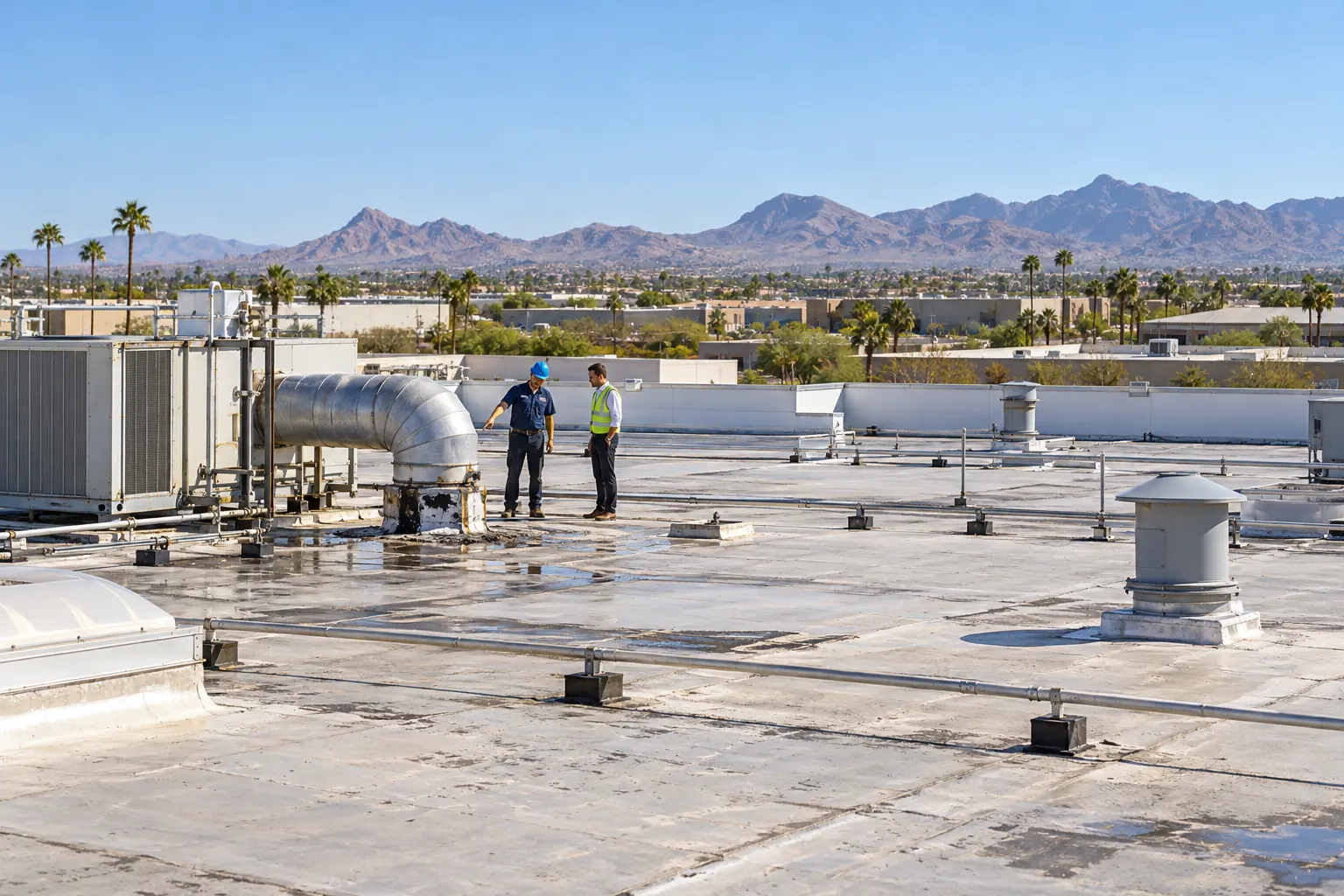
Zone-by-zone repairs around units, stacks, and piping, scheduled with your facility manager.
Industrial Roof Repair details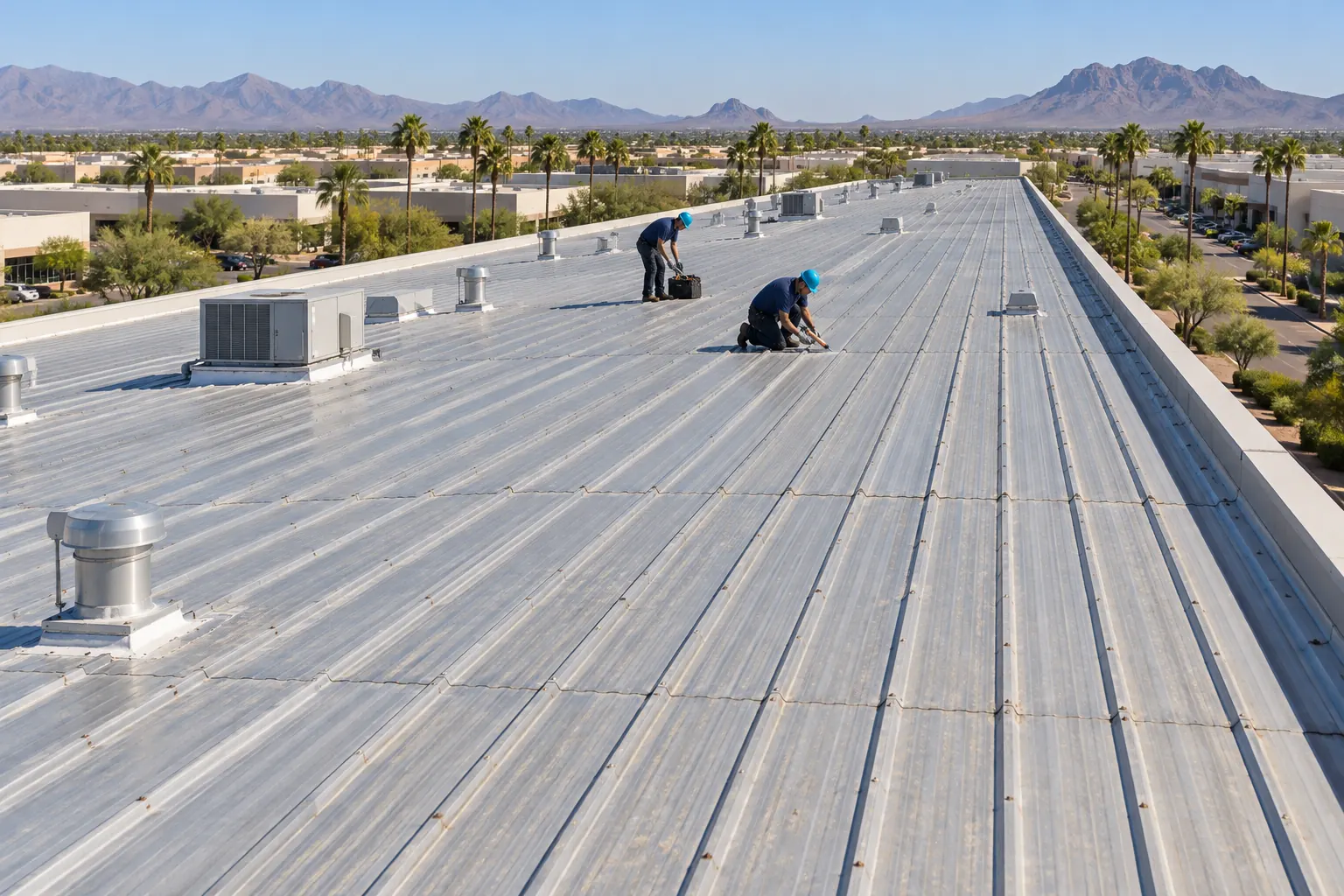
Fastener and lap repairs on metal roofs over production and storage bays.
Commercial Metal Roof Repair detailsCall with the line, the room below, and your shutdown windows. Most pitch pan repairs happen with the line live.
Five steps on a Price Corridor plant roof.
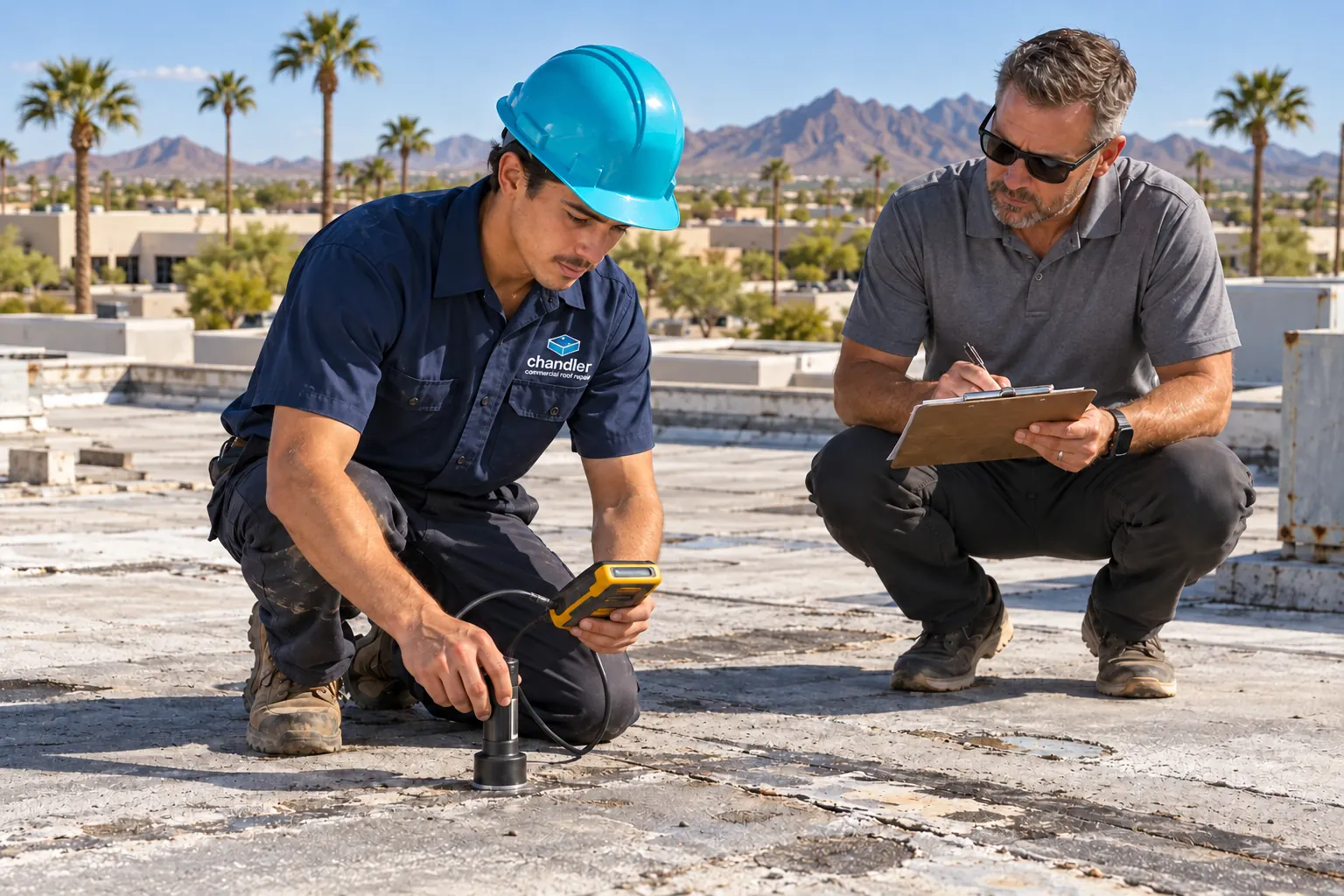
We walk the pipe runs with your maintenance lead, checking every support, pitch pan, and penetration, and mark leaks and wet insulation on the roof plan.
Roof work zones and timing are set with the facility manager, along with any fan shutdowns and lockout.
Air intakes near the work get covered, and low-odor sealants are used near clean spaces and roof equipment.
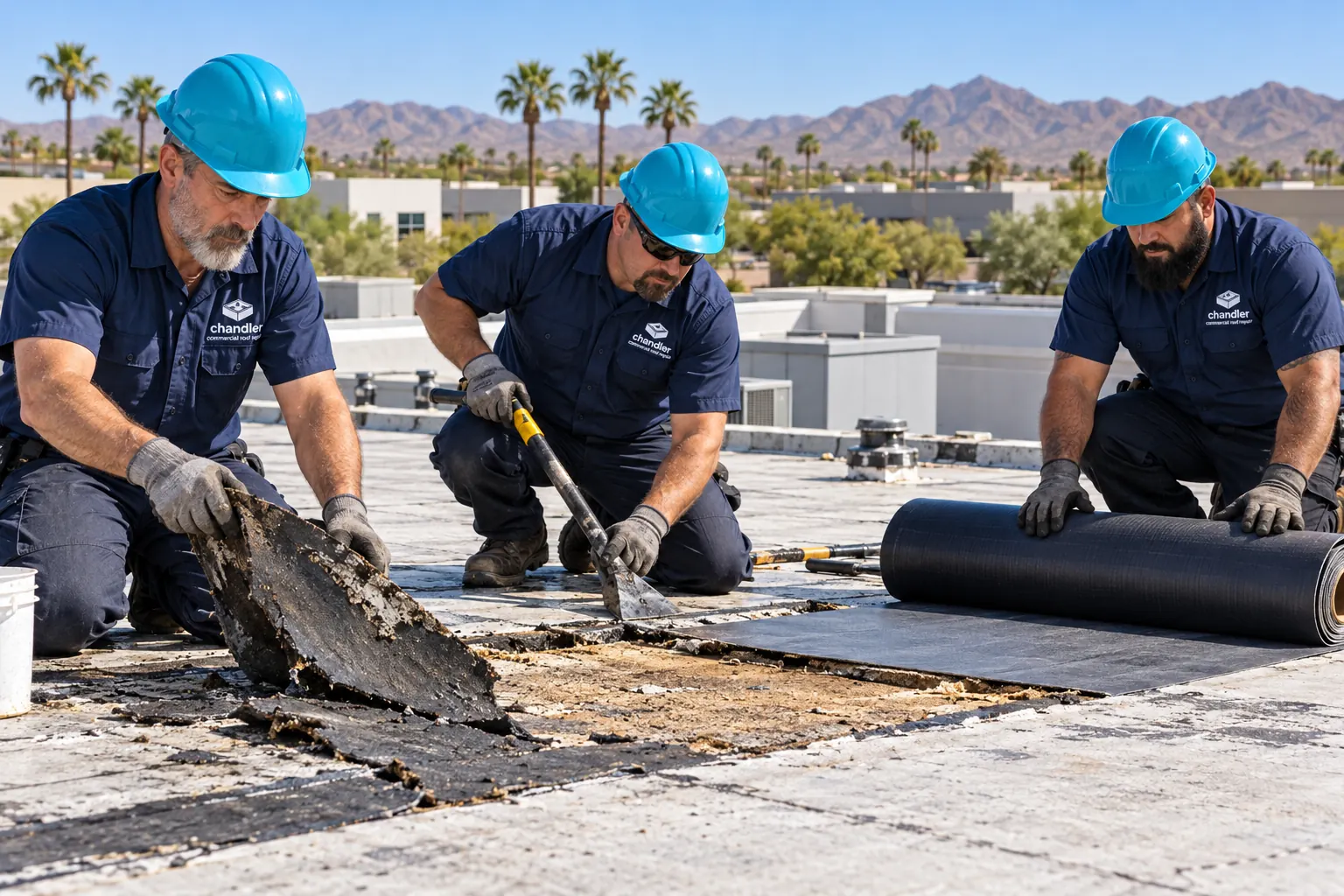
Pans are refilled, supports reset on new pads, and membrane patched under and around live lines.
Each repaired zone gets a water test and a final look before the next one opens.
Nearby areas and the repair each one sees most.
Wide warehouse roofs with heat-worn seams.
Occupied storefronts and offices.
Community building vent boots.
Rooftop unit curbs re-flashed in place.
Answers on piping, pitch pans, clean spaces, and permits.
It comes down to what sits under the membrane. Core cuts come first, because wet insulation loses its value and can rot or rust the deck.
Repair fits when wet insulation is limited to spots near a curb or drain, the deck is firm, and the membrane has years left. Replacement fits when core cuts find wet insulation across large areas or leaks keep returning.
The City of Chandler Building Safety office covers the Price Corridor. Whether a repair needs a permit comes down to its size; a seam or pitch pan repair is less likely to need one than replacing a roof section, so check with the city before larger work.
Yes, in most cases. The old fill is cleaned out around the conduit or gas line, and new fill goes in with the line left alone. A pan that is rusted or too small gets replaced, which is planned with your facility team.
By covering nearby intakes, using low-odor sealants, and keeping dusty steps like cutting insulation to agreed windows. Work near exhaust fans waits until they are shut down and locked out, and catch pans go under any opening in the deck.
Your facility team or piping contractor. The roofer marks which supports need new pads and how much lift is needed, and lines are only moved or shimmed by the people responsible for them.
Wear. Lines expand and shift with heat and vibration, grinding supports into the membrane until it splits. New pads under each support spread the load, and the membrane under them is patched first. Supports sitting right on the membrane get the first look on every inspection.
Twice a year at least: late spring before monsoon season and October once storms ease, plus after any severe wind. Plants with heavy rooftop piping also benefit from a check after major equipment changes, since new lines often mean new penetrations.
With planning, yes. When a section under a pipe run needs new membrane, your piping contractor supports or raises the lines while the roof under them is replaced, then sets them back on new pads. The roof work is done in short sections so lines are off their supports for as little time as possible.
Request a free estimate or call about pipe and conduit leaks on a Price Corridor roof.
Leave a name and number and we will call you about the leak or repair.
Or call now: (623) 310-0187