Sun
Heat-Opened Field Seams
- You See
- A lifted edge you can slide a finger under along a seam.
- What It Means
- Years of heat cycling stretch and release the seam. It gets cleaned, primed, and welded or taped with matching material.

Flat roof repair in Chandler for TPO, EPDM, and built-up roofs, starting where leaks start: seams, drains, curb flashing, and parapet joints.
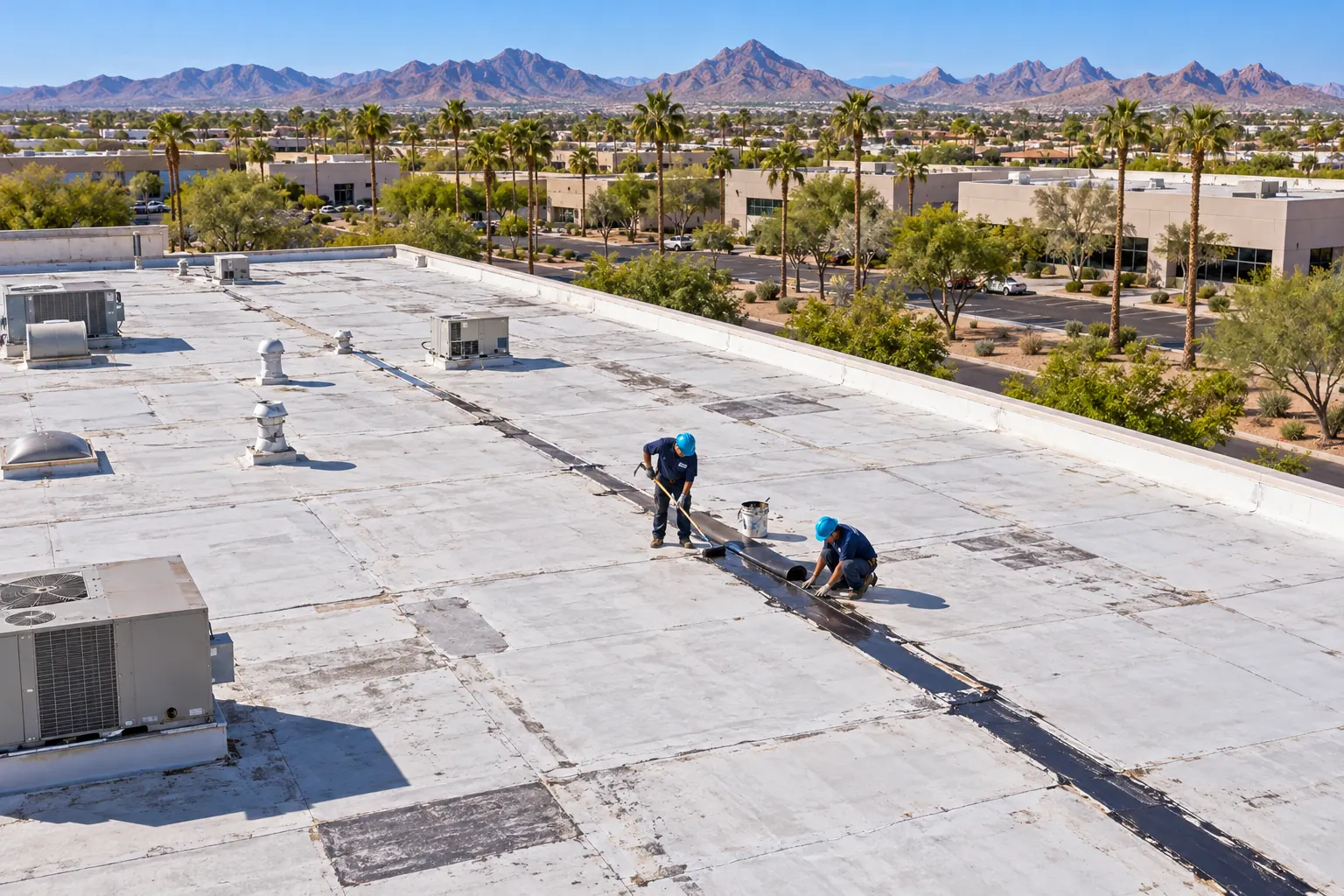
A flat roof with dry insulation and a firm deck takes repairs well. Here is how to tell which side your roof falls on.
Each of these starts at a transition or a weak spot in the sheet.
Four repair levels, from smallest to largest. The inspection decides which one the roof needs.
| Repair | What It Fixes | When It Is Enough |
|---|---|---|
| Seam reseal or patch | Split or lifted seams and small punctures | Damage is local and the sheet beside it is still flexible |
| Flashing rebuild | Curb, parapet, and pipe flashing leaks | The leak traces to a transition and the curb itself is solid |
| Drain and scupper repair | Clogged strainers, loose clamping rings, open scupper wraps | Ponding clears once water can leave the roof |
| Section replacement | Wet insulation and failed membrane in one area | Core cuts show the wet area has edges you can find |
Flat roofs give little warning before a small opening turns into wet insulation. Fixing it early keeps the job small.
Rain finds the opening and wicks under the sheet along the seam line.
A welded or taped seam repair seals the opening while the insulation under it is still dry.
Standing water adds weight and keeps soaking the seams around the drain.
A clear drain and a reset clamping ring move water off within hours of a storm.
Wind-driven rain gets behind the wall flashing and runs down inside the wall.
Resealed joints and refastened coping close that path before the wall sheathing stays wet.
Moisture spreads board to board through the joints in the insulation.
Cutting out a small wet area now avoids replacing a much larger section later.
Call with the building address and where the lifted seam or leak sits on the roof. We set up an inspection before the next rain.
Five steps on every flat roof job.
We probe seams, check every drain and scupper, look at curb and parapet flashing, and mark wet insulation with a moisture meter. Core cuts confirm what the meter shows.
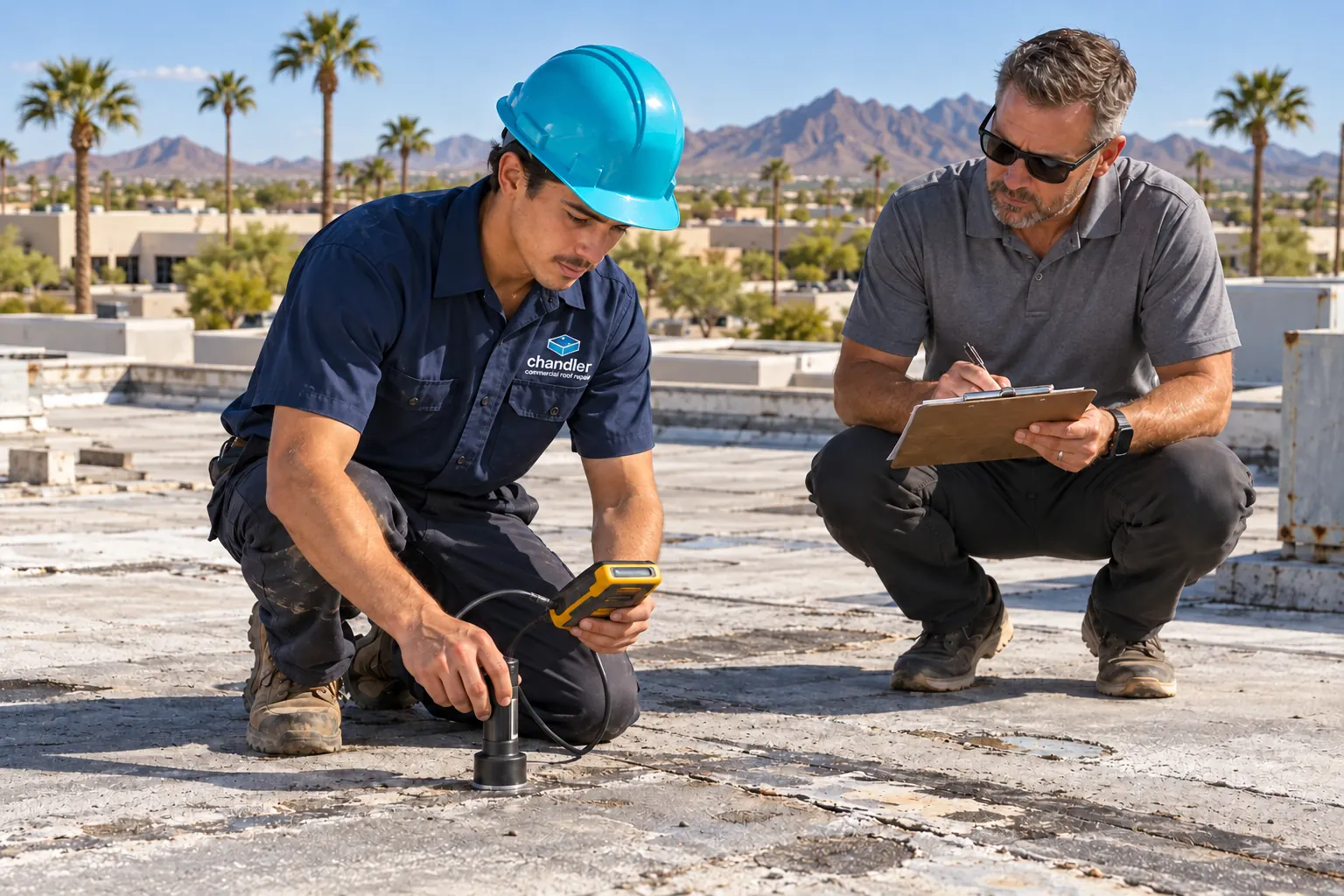
Dirt, old mastic, and chalky surface film come off the membrane around the repair. Aged TPO and EPDM get cleaned and primed so the new material bonds.
Any wet insulation under the repair area comes out and gets replaced with dry board, fastened to the deck before new membrane goes down.
TPO patches are heat-welded, EPDM gets compatible seam tape and cover strips, and curbs and parapets get new flashing at the proper height.
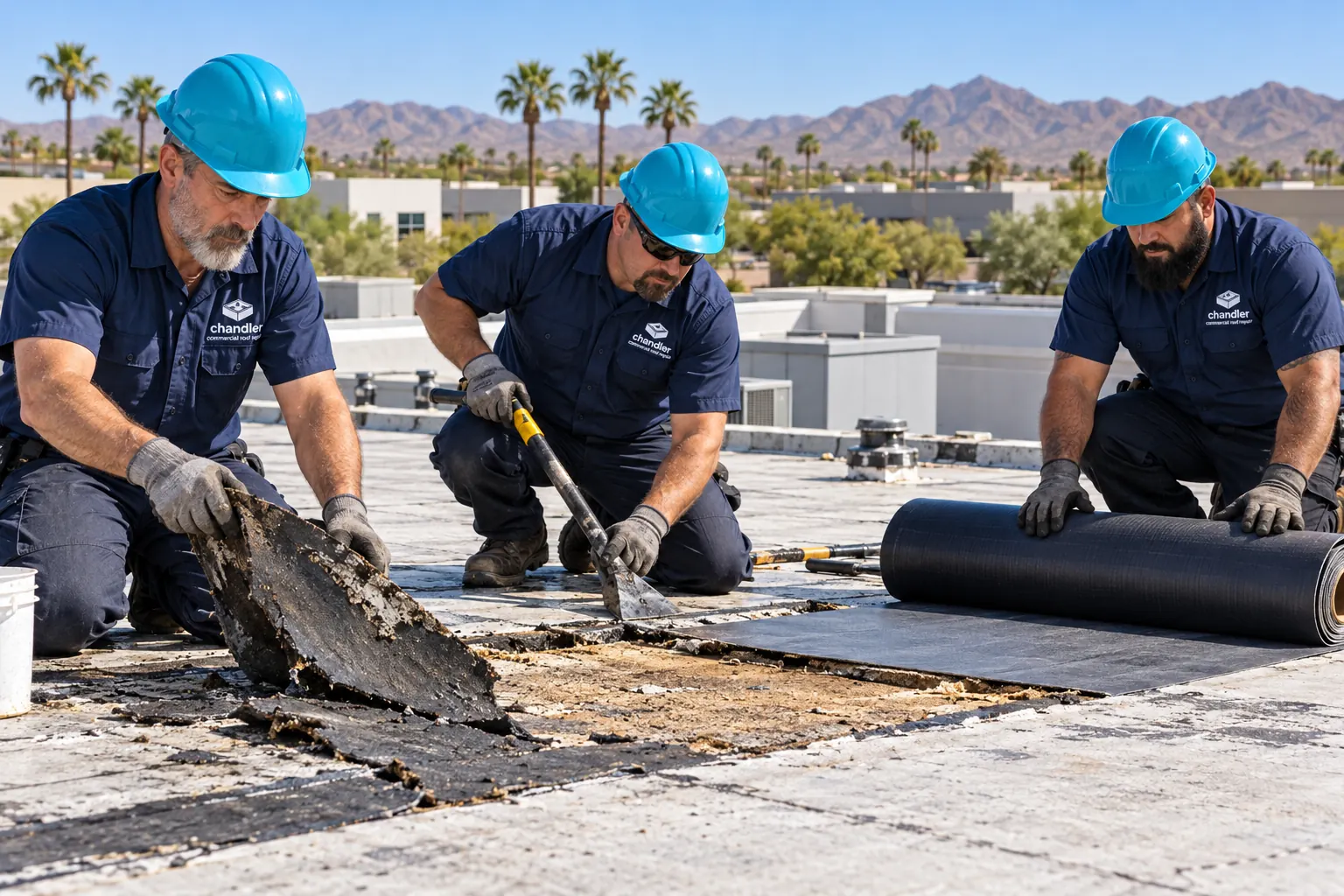
Every new seam is probed for gaps, and the area gets a water test. A recheck after the next rain confirms the leak is gone.
Flat roof problems often overlap with these two services.
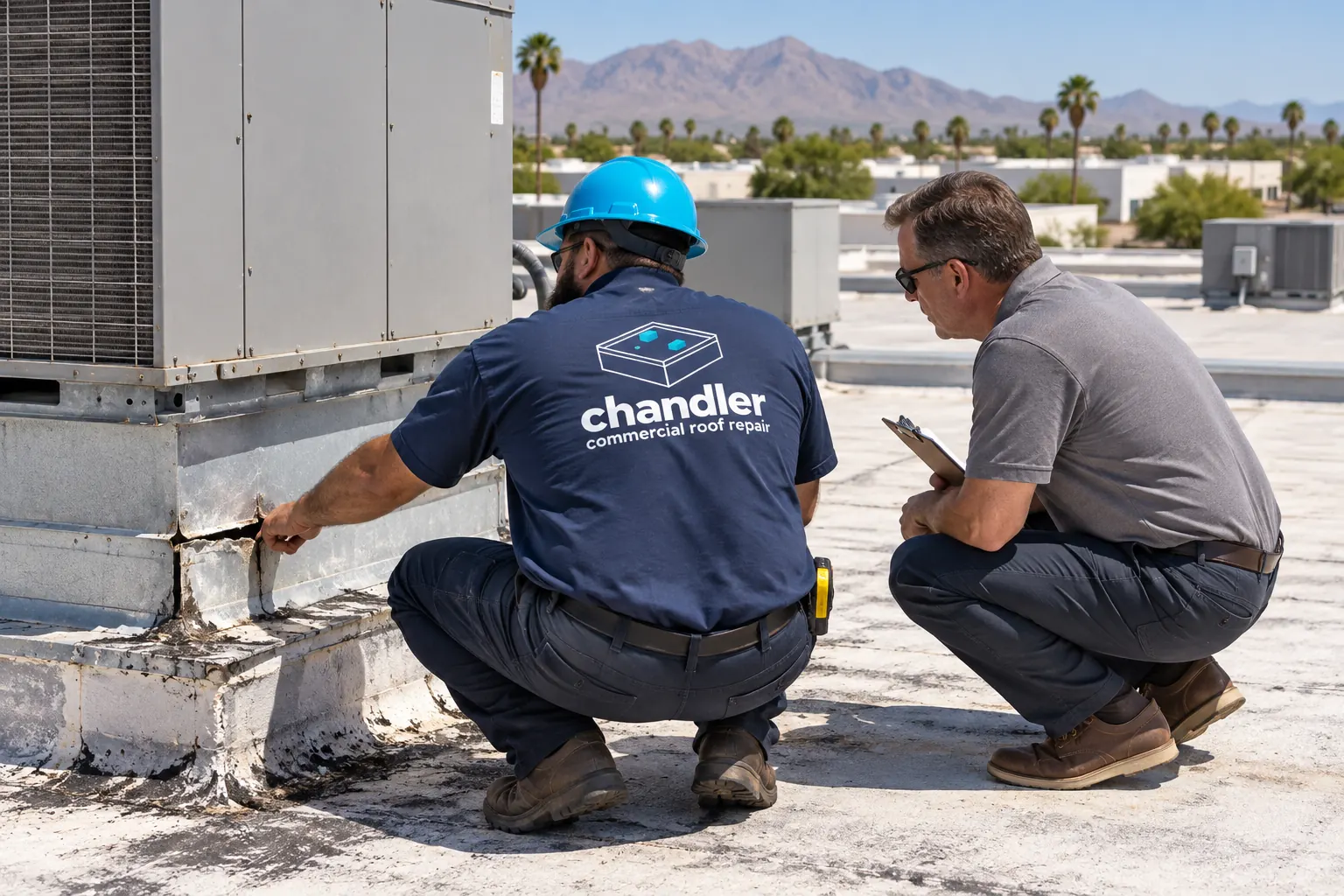
When the stain inside lines up with no visible damage, leak tracing finds the entry point before the flat roof repair starts.
Commercial Roof Leak Repair in Chandler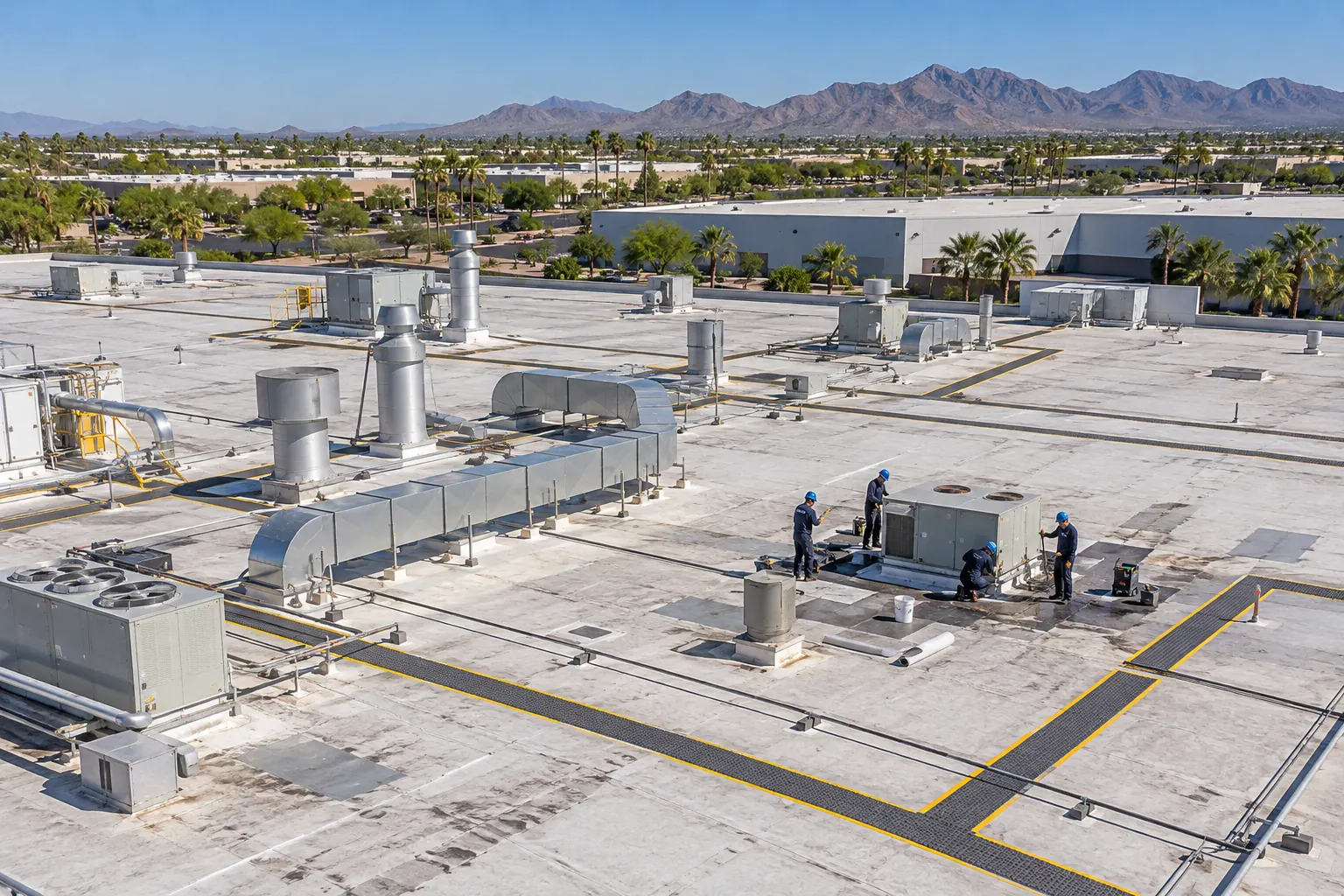
Large plant roofs with exhaust stacks and process piping need flat roof repairs scheduled around shifts and equipment shutdowns.
Industrial Roof Repair in ChandlerAnswers on seams, blisters, ponding, and older patches.
At transitions, where the membrane meets a wall, a drain, or a piece of equipment. On West Chandler warehouses and flex buildings, the usual suspects are heat-cycled field seams, drains packed with monsoon dust, cracked curb base flashing, and parapet coping joints that have separated. Repairs start there, before anyone patches the open field.
Often, with extra prep. Aged TPO has to be cleaned and primed before a new patch will weld well, and a patch on very old sheet fails sooner. When a probe shows the surrounding sheet will not hold a weld, replacing that section is the better repair.
Small, intact blisters can be watched. Blisters that are cracked, growing, or sitting in a ponding area get cut open, dried, and patched before water reaches the insulation underneath. Each watched blister is marked on the roof plan so it gets checked on the next visit.
First by finding why it ponds. A blocked drain is cleared and its clamping ring reset; a sagging deck or crushed insulation under the low spot gets repaired from below the membrane. Adding slope or new drains is a larger project and gets priced separately.
Sometimes. Layered patches with mastic smeared over them have to come off down to clean sheet before anything new bonds. If the patched area keeps growing, a section replacement costs less over time than another round of patches.
Very little on most flat roof jobs. Work happens on the roof, with materials lifted up and staged away from entrances. Cutting out wet insulation is the noisiest step, and it can be scheduled for early hours or quiet days.
Request a free estimate or call about a flat roof leak in Chandler.
Leave a name and number and we will call you about the leak or repair.
Or call now: (623) 310-0187