Equipment
Exhaust Fan Curbs
- You See
- Stains below exhaust fans and residue around the curb.
- What It Means
- Heat and residue at outlets soften membrane and sealant. Work there waits for shutdown and lockout.

Industrial roof repair in Chandler for plants and distribution buildings, planned around shifts, rooftop equipment, exhaust stacks, and process piping, with low-odor products near intakes.
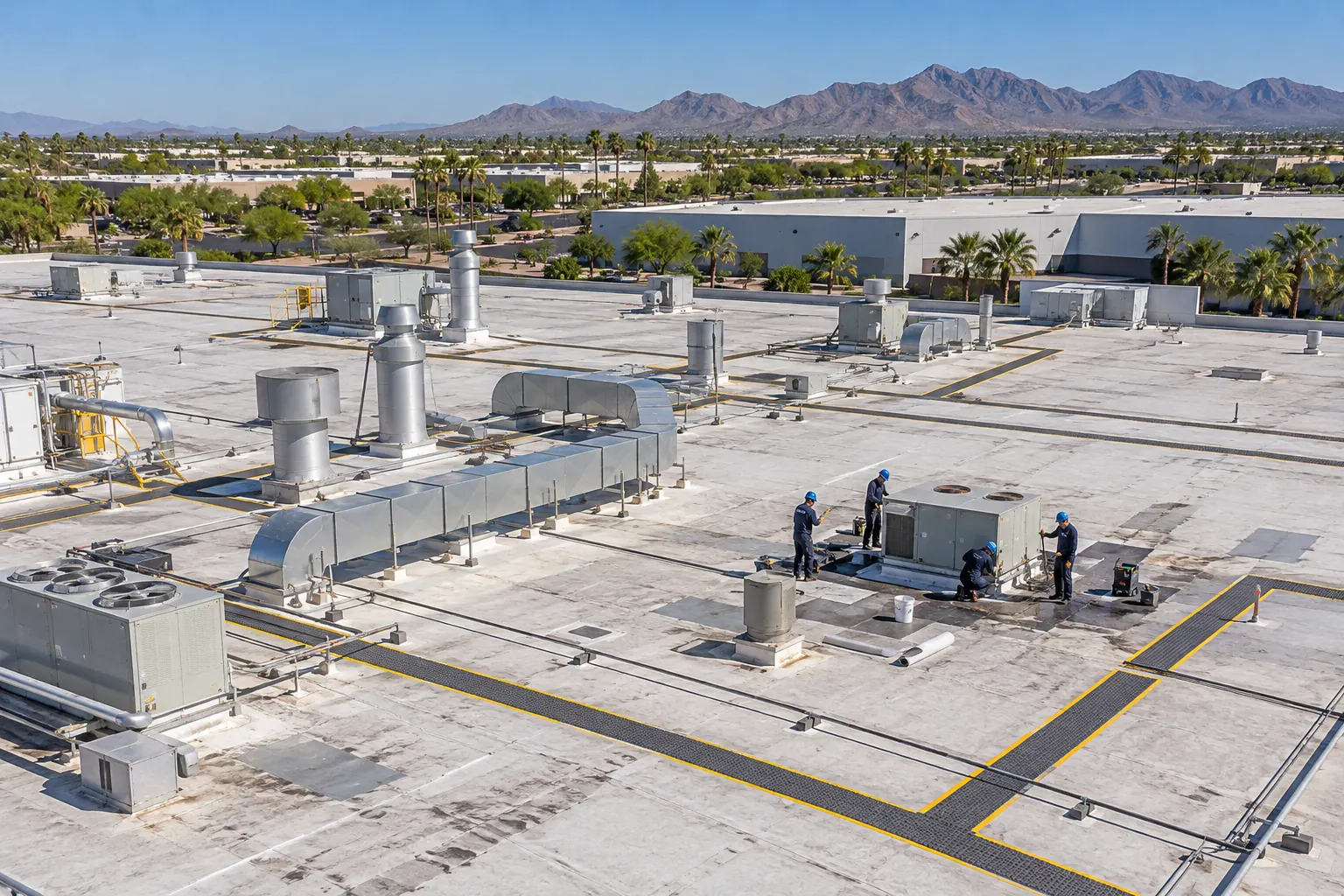
Industrial roofs are large, so most problems get repaired zone by zone. A few signs point to a bigger project.
Plant roofs carry more equipment, more foot traffic, and more exhaust than other commercial roofs.
Repairs are grouped by roof zone so production areas stay open while one zone is worked.
| Repair | What It Fixes | When It Is Enough |
|---|---|---|
| Curb and stack flashing | Leaks at fans, units, and exhaust stacks | The curb is solid and tall enough for new flashing |
| Pitch pan and pipe support repair | Leaks at conduit, gas lines, and supports | Fill has cracked while the pan and support are intact |
| Membrane section repair | Punctures, softened sheet, and open seams | Damage stays within one mapped zone |
| Walkway pads and edge work | Route wear and loose edge metal | Wear is on the surface and the membrane is still sealed |
On a plant roof, a small leak can reach equipment, product, or a clean area. Early repairs keep it small.
Drips land near production lines and electrical equipment below.
Re-flashing the fan curb during a planned shutdown stops the leak on the plant's schedule.
A small cut lets water into insulation under a busy walkway.
A patch plus walkway pads protects the spot from the next technician visit.
Rain runs down conduit and gas lines through the roof into the building.
Fresh fill or a new pan seals the penetration with the lines left in place.
Moisture spreads under heavy units where it is hard to see.
Cutting out the wet zone early avoids lifting equipment for a larger repair later.
Call with the building, the equipment involved, and your shutdown windows. Work near fans waits until they are shut down and locked out.
Five steps that keep production running while the roof gets fixed.
A roofer and your maintenance lead walk the roof together, mapping rooftop units, exhaust stacks, process piping, and intakes, and marking leaks and wet insulation zone by zone.
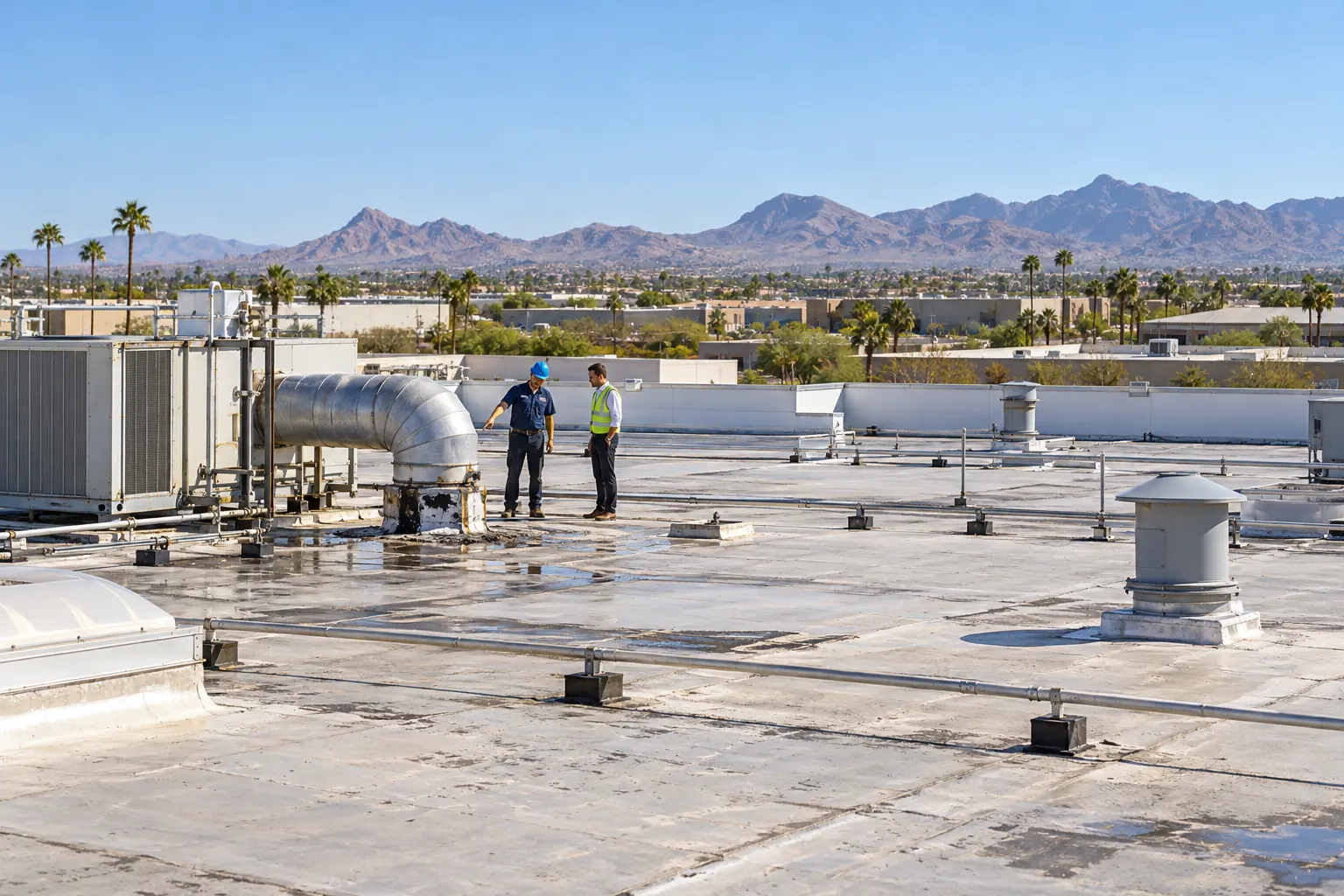
Work zones, start times, and any equipment shutdowns get agreed with the facility manager before materials go up to the roof. Noisy or odor-producing steps go into planned windows.
Intakes near the work are covered, low-odor sealants are used, and catch pans or tarps go under any opening in the deck.
Curbs, pitch pans, seams, and membrane sections are repaired one zone at a time, with each zone closed and sealed before work moves on.
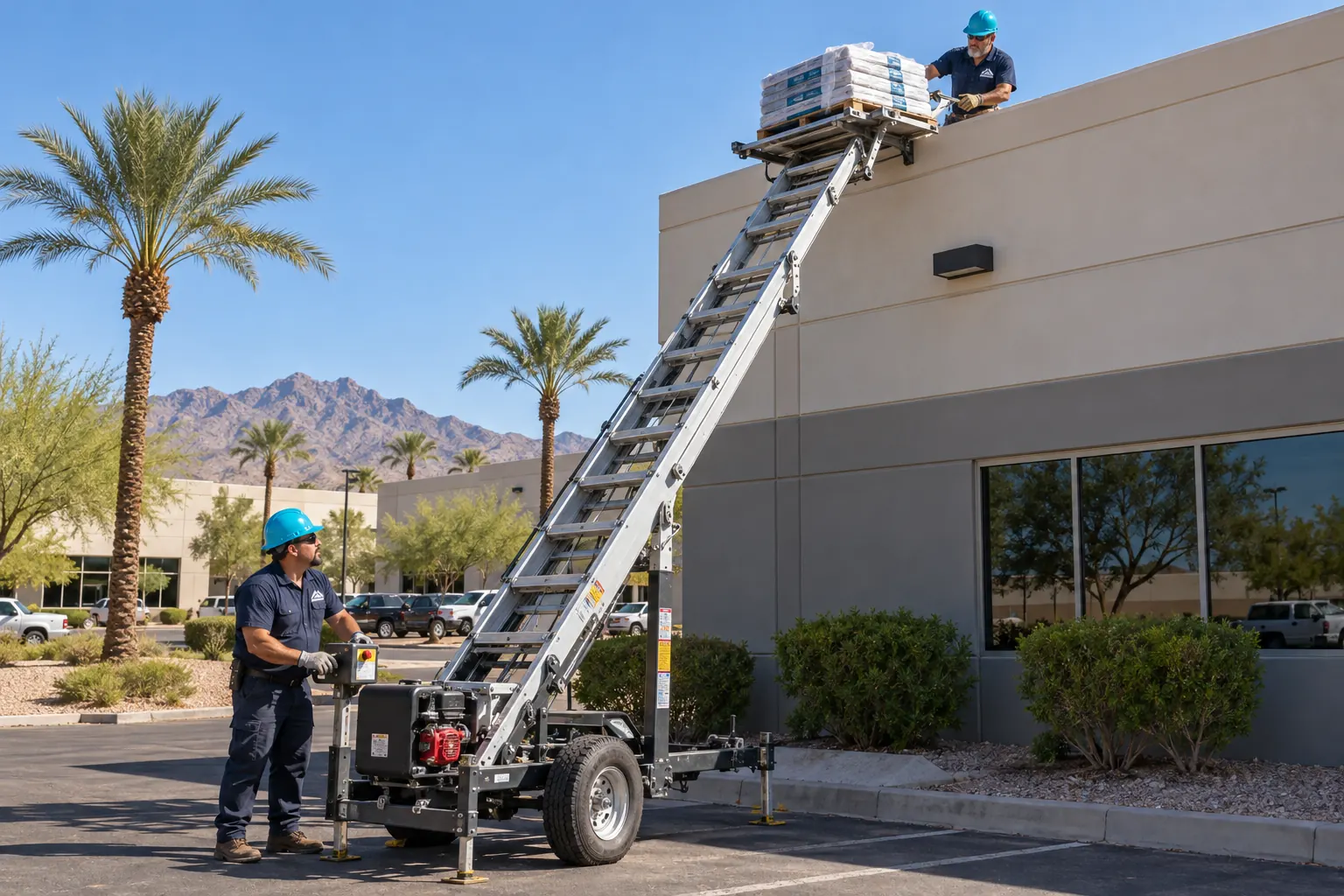
Walkway pads go down along service routes, and repaired areas get a final check and a water test before the zone is signed off.
Industrial roofs often need these two services as well.
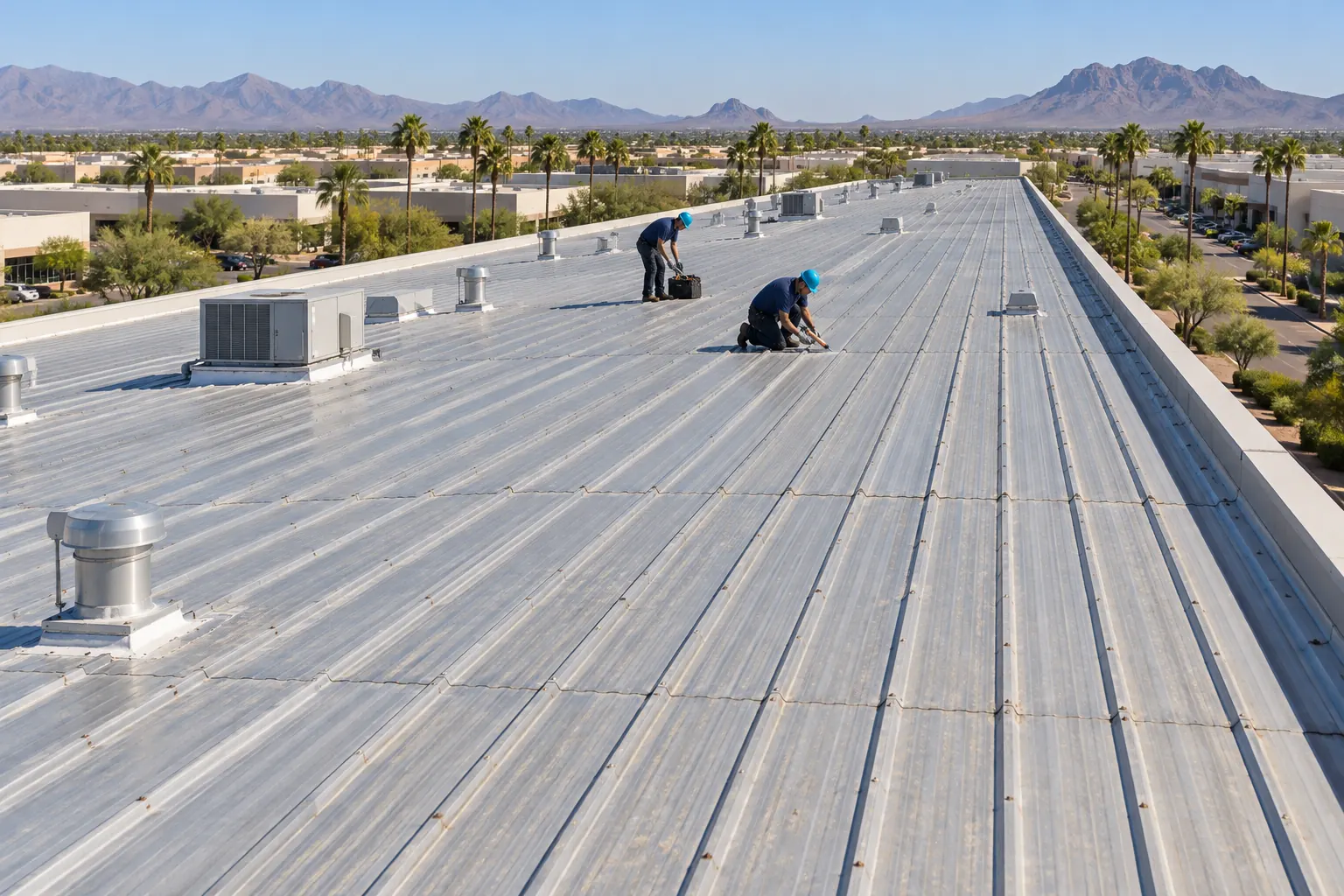
Many plant and warehouse buildings have metal roofs over production or storage bays, with fastener and lap repairs of their own.
Commercial Metal Roof Repair in Chandler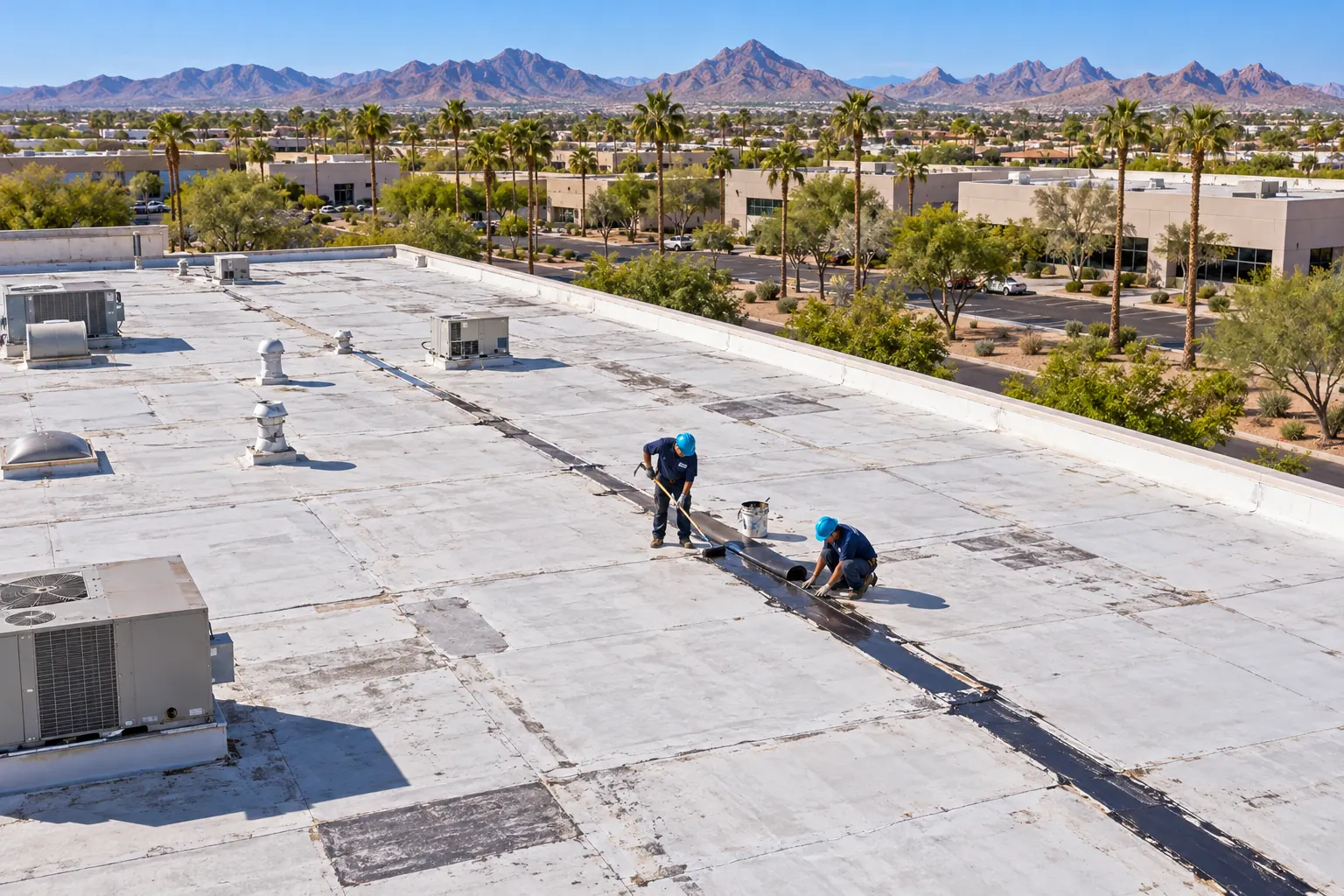
Office and lab sections on industrial campuses often sit under flat roofs that need seam and flashing repairs.
Flat Roof Repair in ChandlerAnswers on production, lockout, walkway pads, and exhaust.
Carefully, and on the plant's schedule. Price Corridor campuses run semiconductor, aerospace, and technology operations where dust, odors, and vibration matter, so rooftop units, stacks, and piping are mapped first and work windows set with the facility manager. Low-odor sealants, covered intakes, and walkway pads protect clean spaces, and work near exhaust fans waits for shutdown and lockout.
Yes, for most of the work. Seam, flashing, and pitch pan repairs are quiet and stay on the roof. Steps that open the deck, cut insulation, or use solvent-based products go into windows agreed with you, often early mornings or planned shutdowns.
Your maintenance team or equipment contractor. The roofer identifies which fans and units need to be off for the repair, and work in those spots starts only after the equipment is shut down and locked out by the people responsible for it.
Most do. Technicians cross the same paths to units and fans every week, and boots and dropped tools wear through membrane along those routes. Pads along each route spread the load and give a clear path to follow.
Heat, grease, and process residue from exhaust break down some membranes and sealants over time. The affected area is cleaned or cut out and replaced with material rated for that exposure, and the outlet is checked for anything that can be pointed away from the roof surface.
That is set by the plant's schedule more than the roof. Each zone is opened, repaired, and sealed before the next one starts, so the roof is never left open overnight. Larger plants get the work split into several visits.
Request a free estimate or call to plan industrial roof repair work in Chandler.
Leave a name and number and we will call you about the leak or repair.
Or call now: (623) 310-0187