Equipment
Split Base Flashing
- You See
- A crack where the membrane turns up the curb.
- What It Means
- Heat and vibration work the corner. New base flashing is set at the required height.

San Tan Valley commercial roof repair for leaks at rooftop units: curb base flashing, cover panels, and pitch pans repaired with the unit left on its curb.
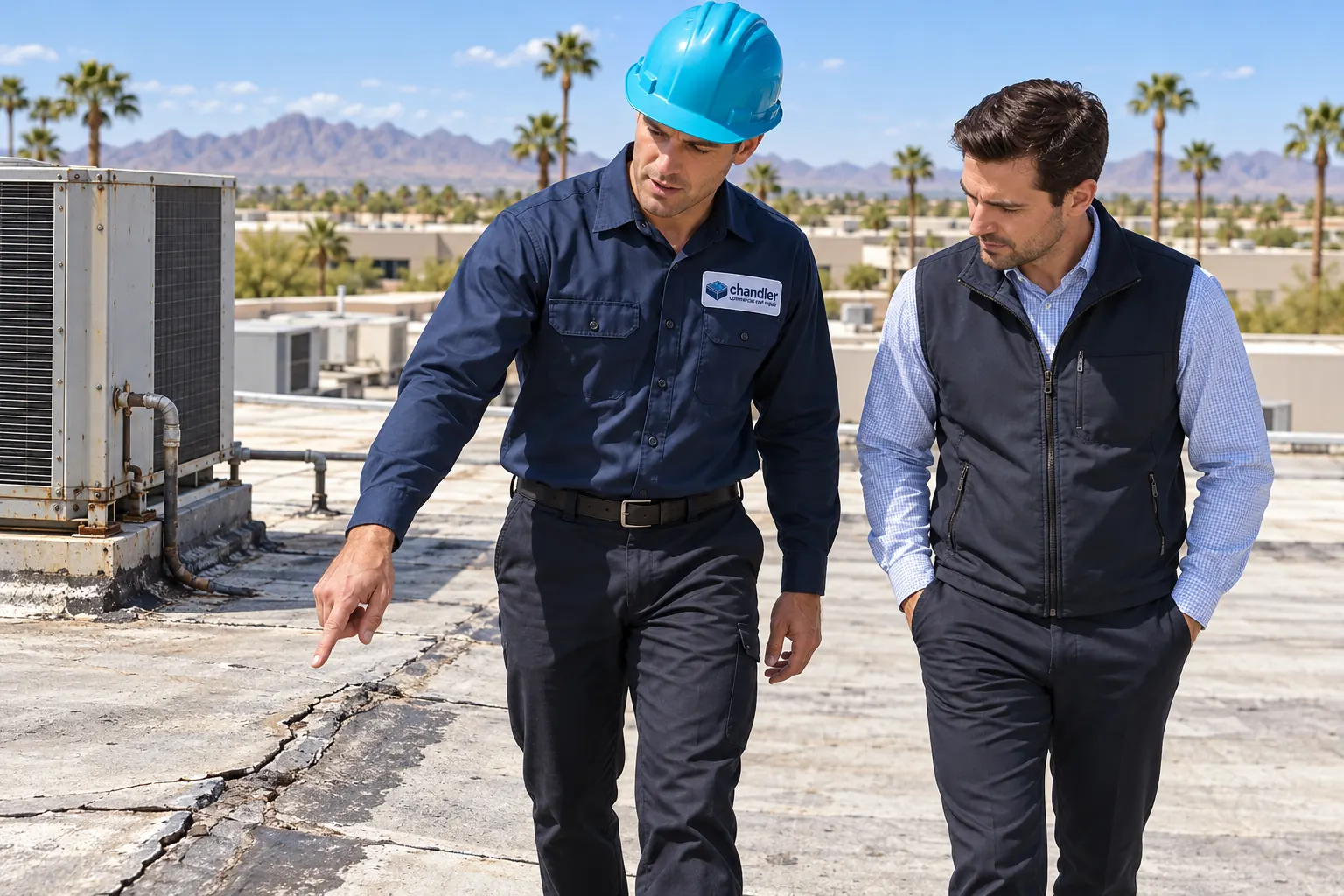
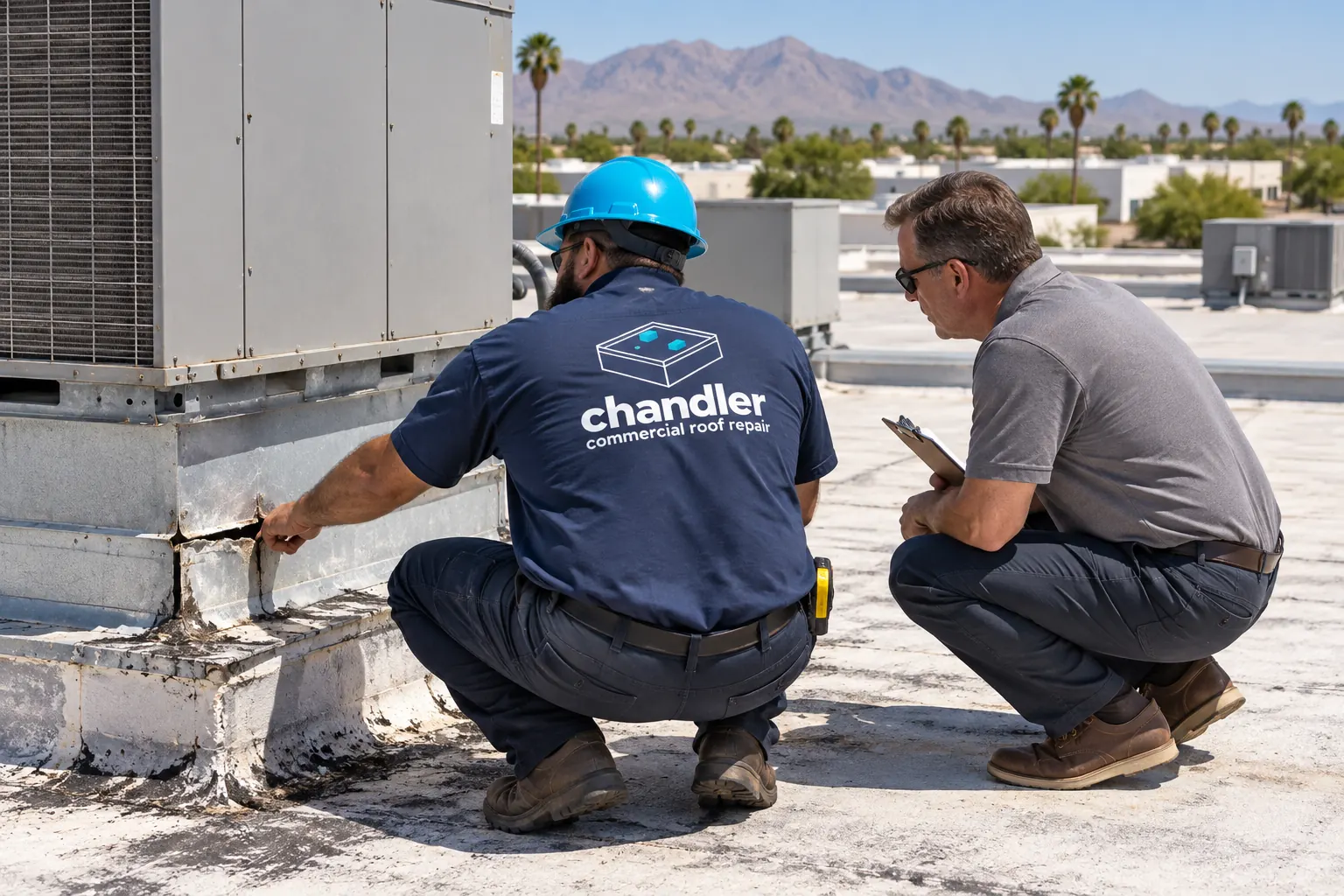
Shopping centers, offices, and service buildings in San Tan Valley carry rooftop units on nearly every suite. When a ceiling stain sits below a unit, the leak almost always comes from the curb: base flashing that split or pulled away, loose counterflashing, or open joints in the cover.
Most of these get fixed with the unit left in place. It only comes off when the curb has rotted or sits too low for new flashing. Since July 1, 2026, the town has shared some building services with Pinal County, so we confirm the permit desk first.
Rooftop units move, vibrate, and get serviced often. These are the spots that open up.
Fixing curb leaks in place protects the tenants below and the equipment above.
Pulling a unit to fix a leak means downtime and a crane.
Re-flashing in place keeps cooling running for the tenant.
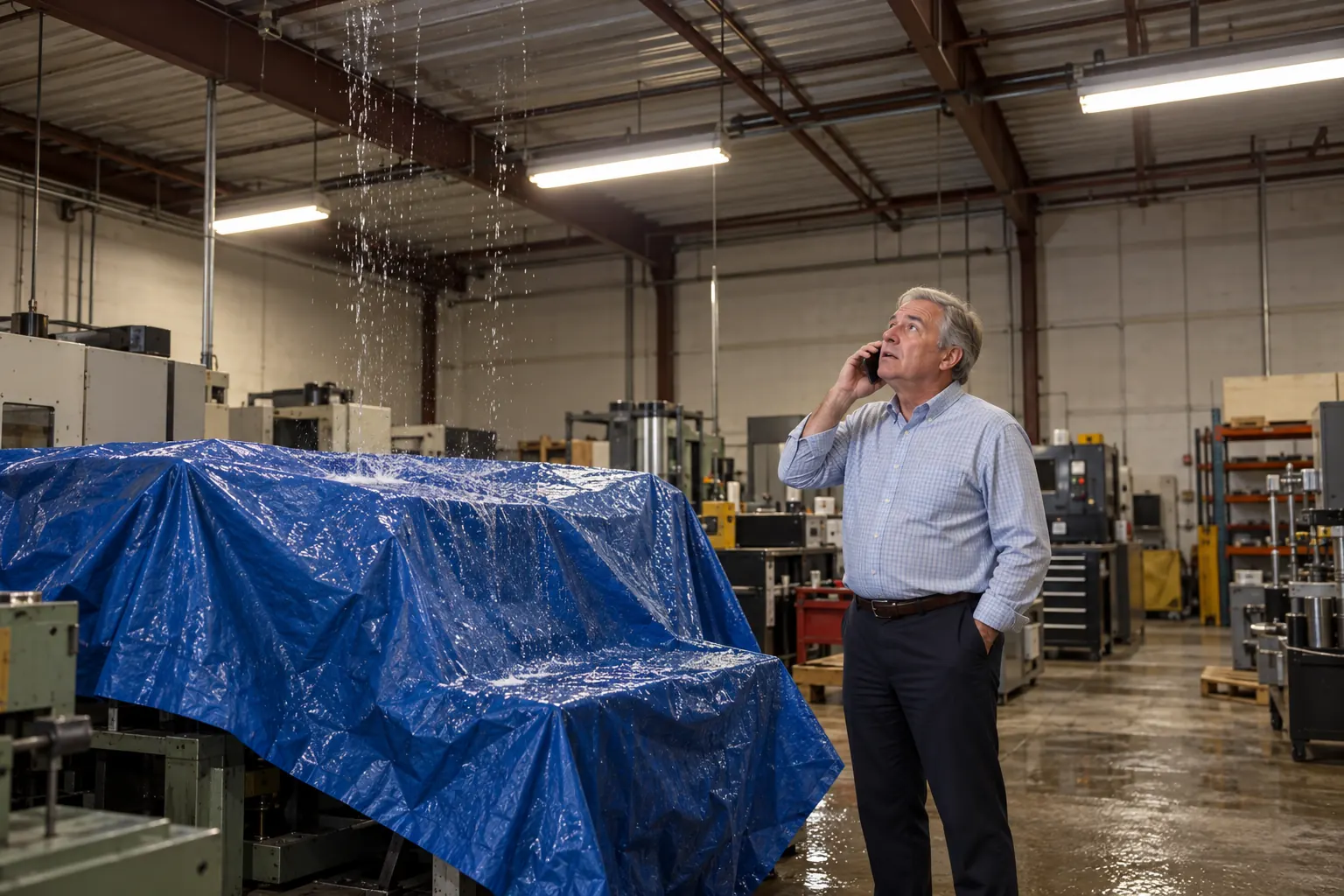
Water drips into ceiling grids and ductwork under the unit.
Sealing the curb stops the drip at the grille and protects the ductwork.
Moisture wicks into the insulation around the curb base.
Wet board near the curb is replaced before the new flashing goes on.
Repeat service visits puncture the same patch of membrane.
A walkway pad from the hatch to the unit spreads the load.
Curb leaks usually involve one or both of these services.
Confirms whether the stain under the unit comes from the curb or a nearby seam.
Commercial Roof Leak Repair details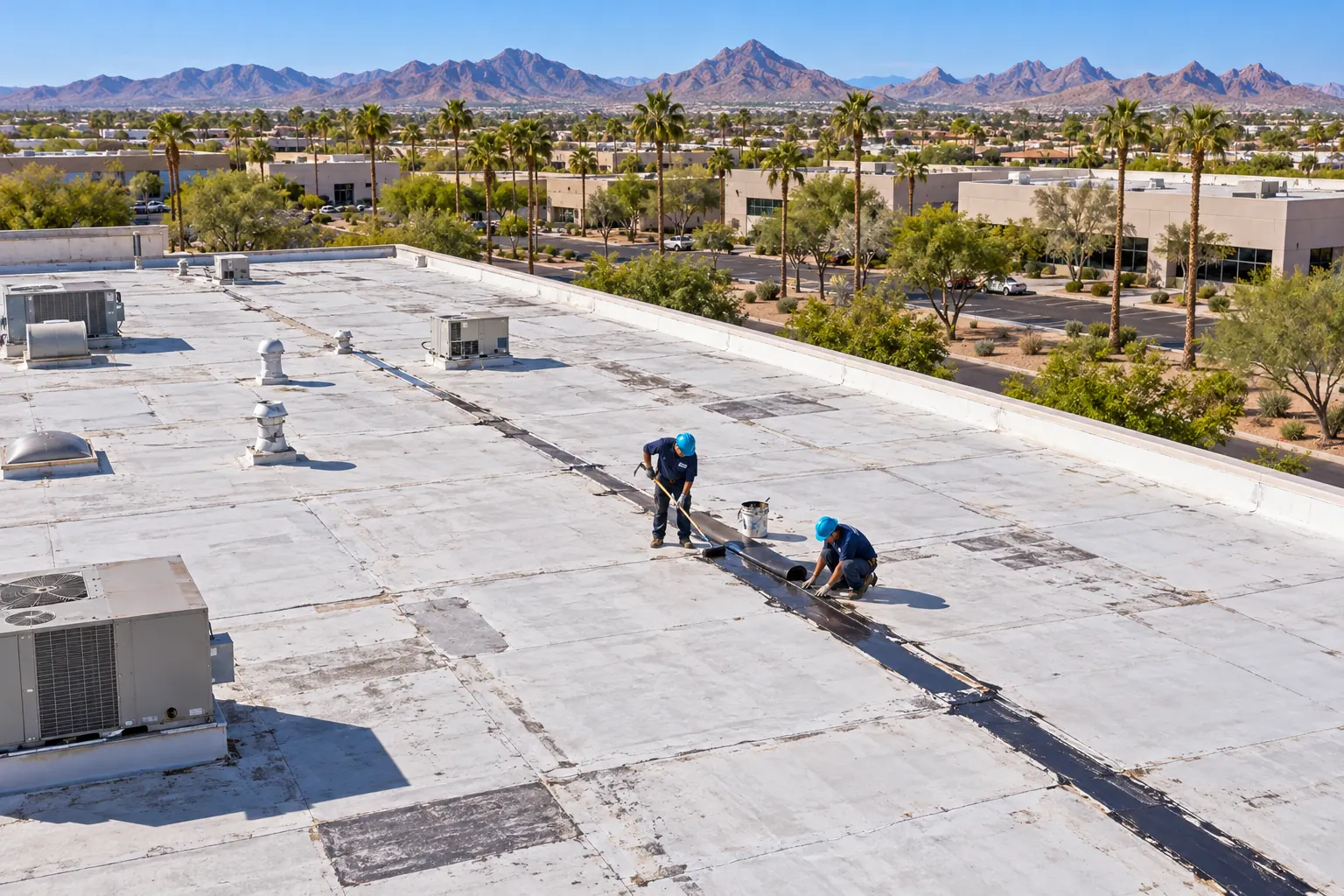
Base flashing, pitch pans, and membrane patches around units on low-slope roofs.
Flat Roof Repair detailsCall with the suite or room below the unit and how long it has been dripping. Curb leaks are usually fixed with the unit left on its curb.
Four steps, with the unit left on its curb.
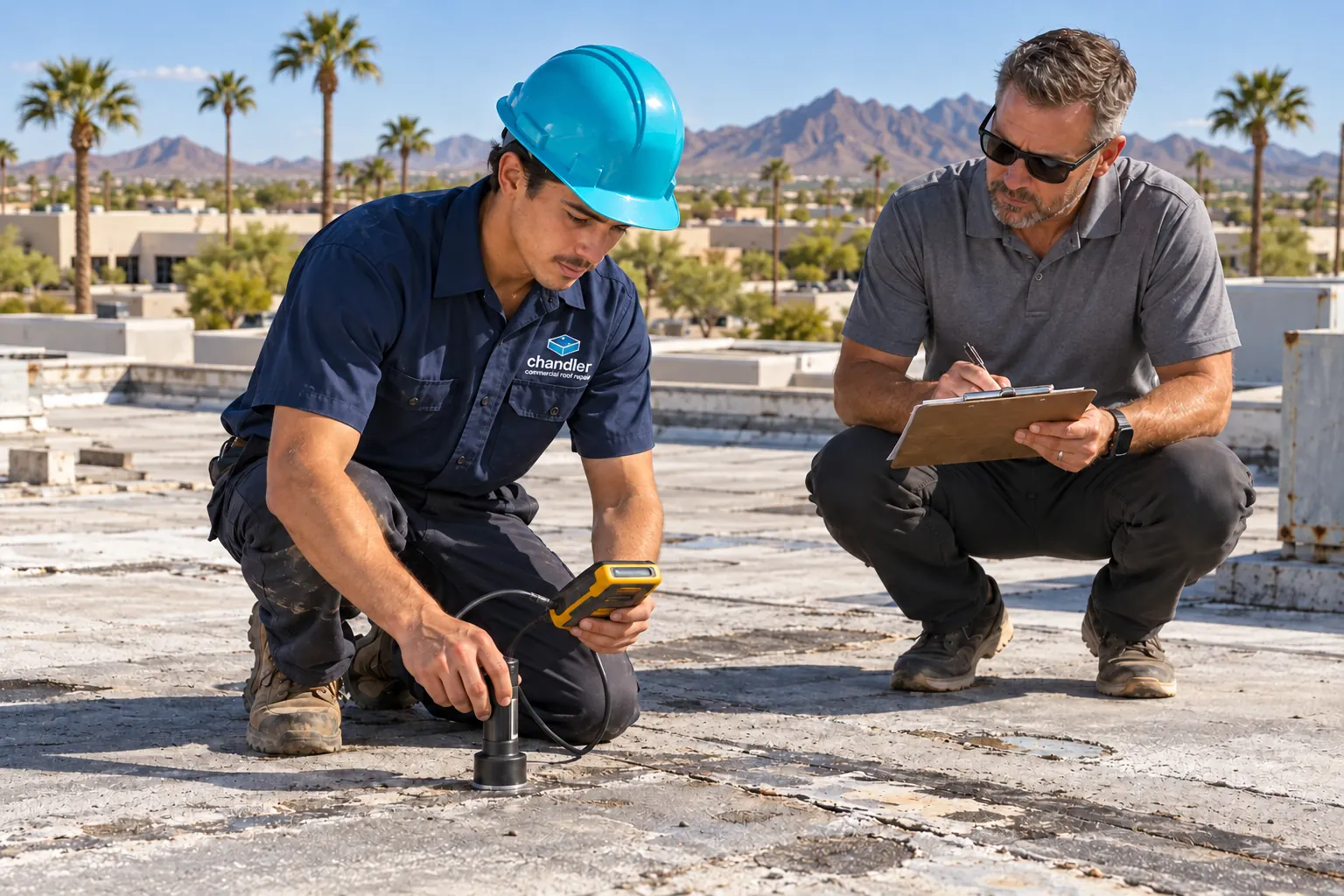
We check the curb flashing, counterflashing, cover panels, and nearby pitch pans, and measure curb height to confirm new flashing will reach the required height.
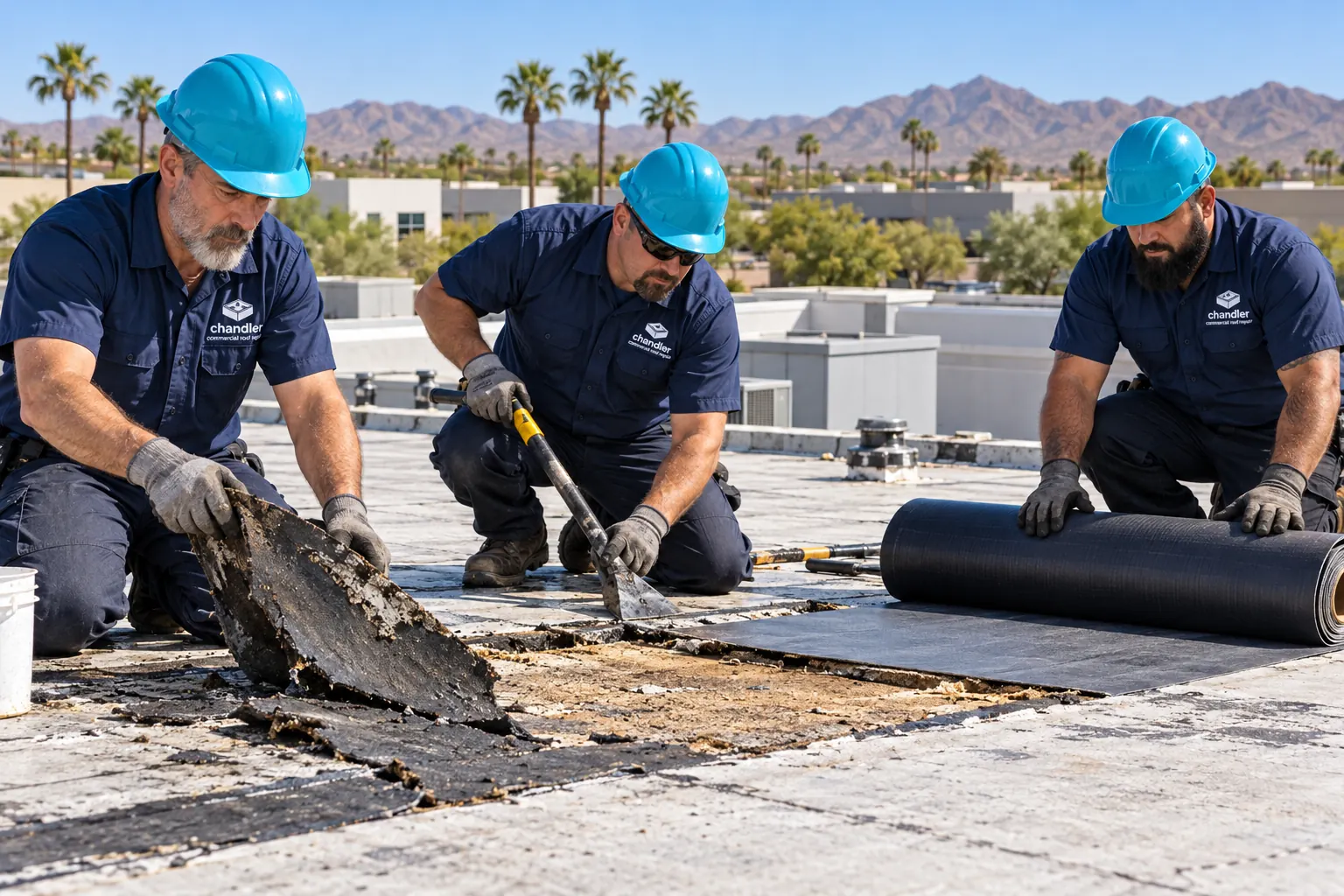
Failed base flashing and old mastic come off down to clean membrane, and any wet insulation at the curb base is cut out.
New base flashing goes on at full height, counterflashing is refastened and sealed, and cover panel joints are resealed.
The curb gets a water test with the unit running, and the ceiling below is checked for any drip.
Nearby areas and the repair each one sees most.
Storm damage photographed before wind repairs.
Clubhouse vent boots and penetrations resealed.
Logged stopgaps for open businesses.
Piping and conduit leaks on plant roofs.
Answers on curb leaks, units, and permits.
Usually, yes. Most curb leaks come from base flashing that has split or pulled away, loose counterflashing, or open joints in the unit's sheet-metal cover.
The curb can be re-flashed in place, the cover resealed, and cracked pitch pans around conduit and gas lines replaced. The unit only comes off if the curb has rotted or sits too low for new flashing.
The Town of San Tan Valley, with some building services run through Pinal County agreements since July 1, 2026. Because the arrangement is new, we confirm which desk handles a given roof repair before larger work starts.
The inspection decides it. Base flashing has to reach a set height above the finished roof surface, and some older or added curbs sit too low for that. In those cases the curb is raised, which means lifting the unit, and that work is planned with your HVAC contractor.
Not on purpose, yet the area by a unit's access panels takes the most traffic on the roof. Tools, screws, and kneeling wear through membrane over time. Patching those spots and adding a walkway pad from the roof hatch to each unit prevents repeat punctures.
A stain or drip at the ceiling grille or diffuser under the unit, water inside the duct, or wet ceiling tiles in a ring around the supply. After heavy rain, look at the grille first, since that is where curb leaks usually show.
For most of it, yes. Flashing work happens around the curb while the unit runs. A shutdown is only needed if the cover panels have to come off or work happens near electrical connections, and that is scheduled with your HVAC contractor.
Yes, a look every spring and fall. The fill around gas lines and conduit shrinks and cracks in the heat, and a cracked pan leaks straight down the pipe. Topping off or refilling a pan is a small repair compared with the ceiling it protects.
Request a free estimate or call about a leak under a rooftop unit in San Tan Valley.
Leave a name and number and we will call you about the leak or repair.
Or call now: (623) 310-0187