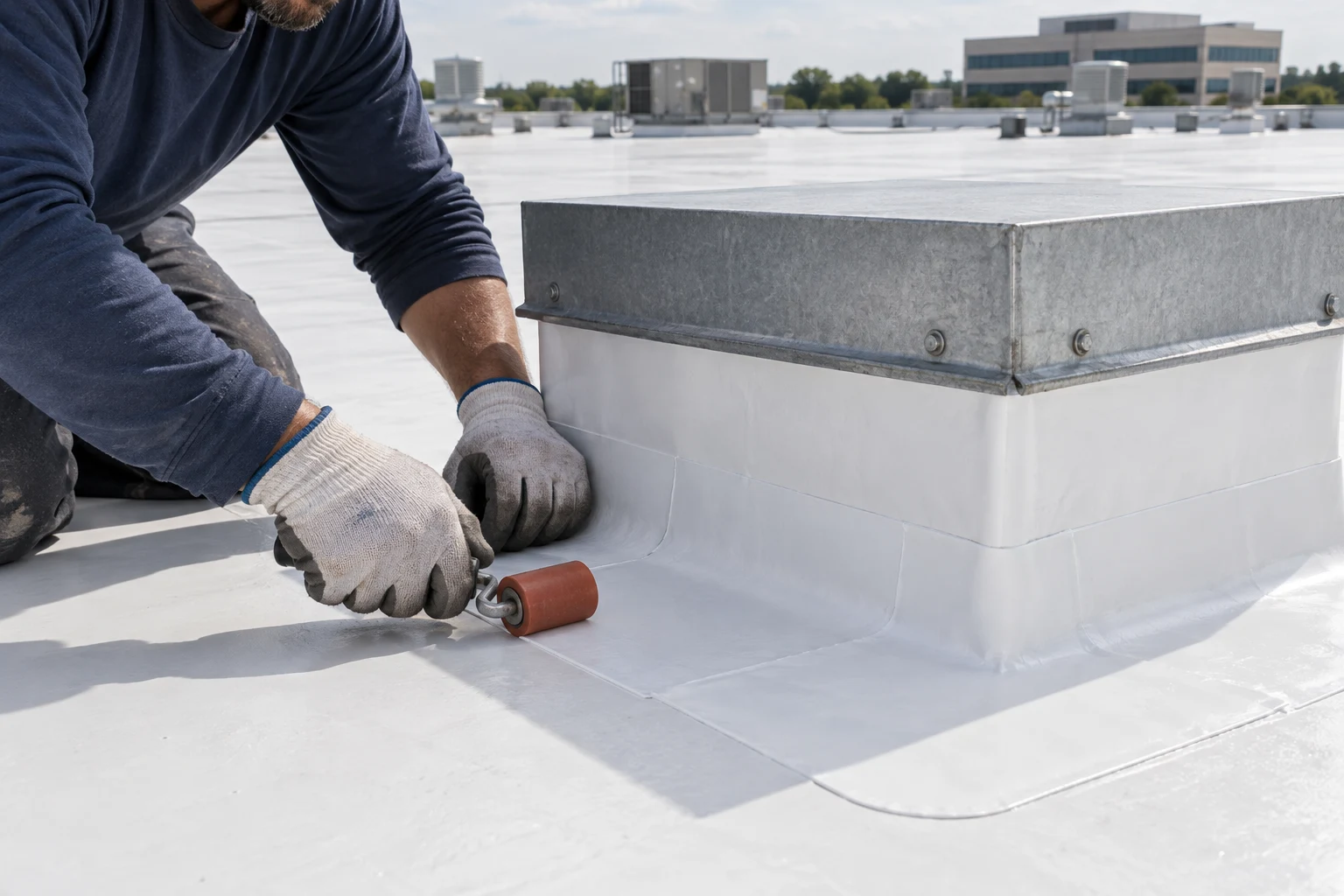
Confirm The Existing System
A white roof is not necessarily TPO. PVC, coatings and other surfaces may appear similar while requiring different repair materials. Roof records can help identify the assembly, but the assessment must establish what is actually present at the repair location.
Age, contamination and previous patches may affect how the repair area is prepared. A suitable connection requires more than placing new material over a visible opening.
Assess Punctures And Seams
A puncture is a different condition from a separating seam or a failed flashing transition. Each needs a repair appropriate to its shape, location and surrounding material. The scope should identify the defect rather than describing all membrane damage as the same patching task.
If the membrane around the opening is badly deteriorated or cannot provide a suitable connection, a larger repair may be necessary. Damage affecting the layers beneath it can also increase the work beyond the surface opening.
Review The Cause Of Damage
Mechanical service routes, loose objects and equipment work can affect the membrane. Understanding that context helps the property plan how to protect the repaired area. A repair cannot prevent every future incident if the same source of damage remains active.
Roof penetrations and changes in plane need attention because they connect the field membrane to other components. A sound patch in the open roof area will not correct a separate failing curb or pipe detail.
Define A Practical Repair
Share the known roof type, approximate location of the damage and any leak history. We assess the material, preparation and related conditions before discussing the repair scope. The objective is a compatible correction connected to serviceable roofing, with the limitations clearly explained.