Describe The Pattern
The timing and location of a leak help establish a starting point. Note the room or unit affected, whether water appears during or after rain and whether the symptom has changed. If earlier repairs were made, explain what happened afterward.
The nearest roof feature is not automatically the source. Moisture can move before it appears indoors, and equipment-related water may require a different investigation. The assessment should remain open to those possibilities until the cause is better understood.
Examine Connected Details
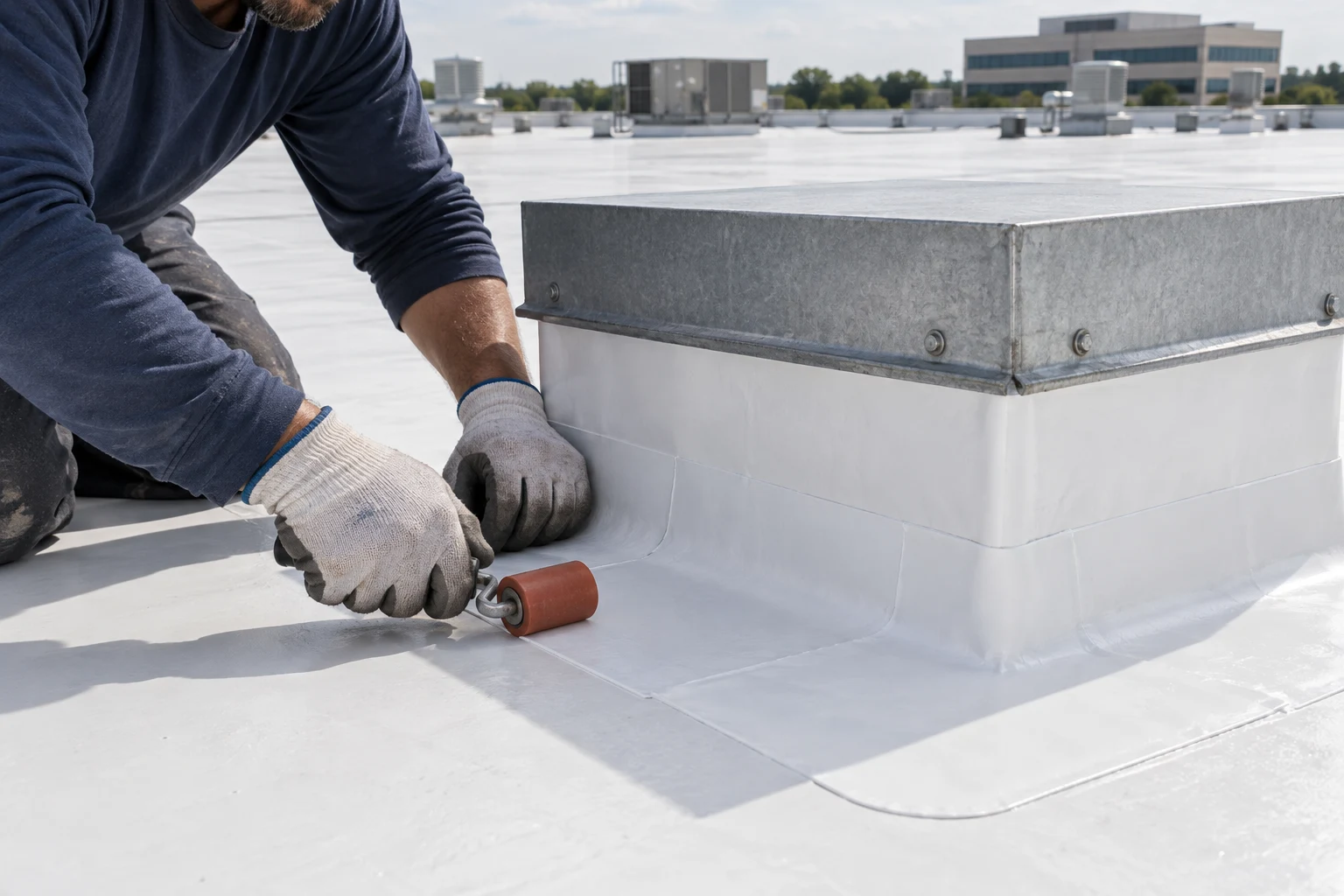
Seams, penetrations, curbs, walls and drainage details may contribute to water entry. Their relevance depends on the roof system and the leak history. Inspecting only the point directly above a stain may miss a connected defect.
Material compatibility matters once the problem is identified. The proposed repair needs a suitable bond or connection to sound surrounding material. Existing patches and coatings should be considered rather than simply covered again.
Determine The Extent
A small visible opening can coexist with damage beneath the membrane. Stopping entry and assessing affected insulation are related but separate tasks. Where moisture conditions are uncertain, additional investigation may be needed before the complete scope can be established.
If failures are widespread, a series of isolated patches may not be the most practical long-term plan. We explain the limits of a local repair in relation to the rest of the roof.
Arrange The Assessment
For Chandler-area commercial properties, provide the full address and the person who can arrange access. Mention multiple roof levels, occupied areas and equipment work near the issue. Do not enter the roof to gather information solely for the inquiry; existing records and safe observations are sufficient to begin.