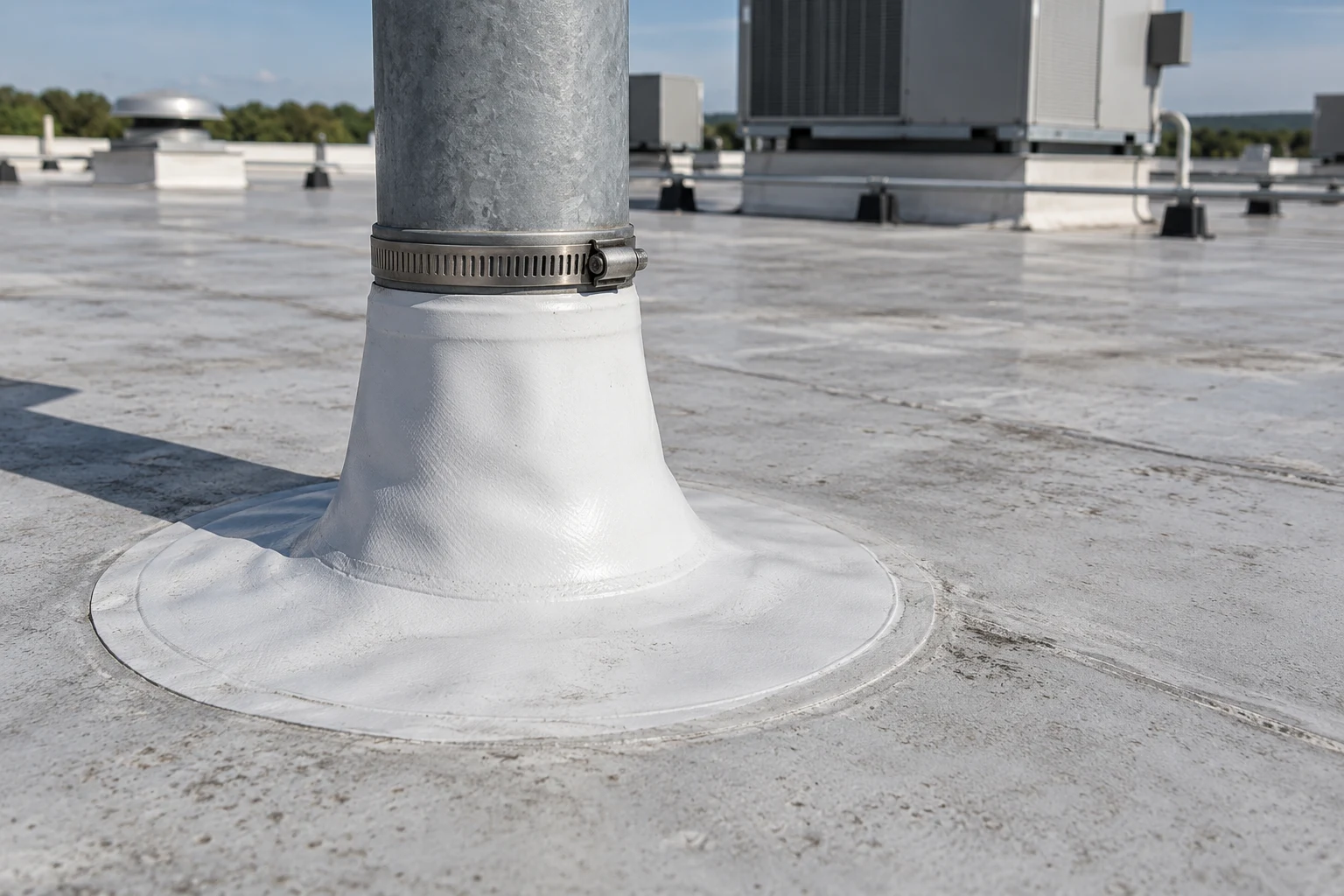
Focus On The Transition
Flashing connects the roof surface to walls, curbs, pipes and other interruptions. These details must suit the roofing material and the movement or geometry of the connection. A defect here can allow water entry even when the nearby field membrane appears intact.
Cracks, open edges or deteriorated connections may be visible, but the inspection should also consider how the detail is assembled. Covering the outside of an unsuitable connection may not correct the underlying problem.
Consider Equipment Changes
A replaced unit, altered pipe or added support can change the conditions at a roof penetration. Let us know about recent rooftop work if a leak began afterward. That timing is useful evidence, although it does not by itself establish who or what caused the leak.
Some repairs require coordination with the trade responsible for the equipment. The roofing scope should identify those dependencies instead of assuming every connected component is part of a simple flashing repair.
Connect To Sound Roofing
The surrounding membrane, wall surface or metal needs to support the proposed repair. If materials have deteriorated or separated over a wider area, the scope may extend beyond the visibly damaged edge.
Moisture inside the assembly should also be considered where a detail has leaked. Repairing the transition and addressing affected materials are distinct parts of the discussion.
Establish The Relevant Detail
Describe the affected area and the interior symptom, if any. Records or photos already available can help identify the location. We can then discuss access and an assessment of the flashing, adjacent materials and compatible repair options.